


 +86 13777722188


0102030405
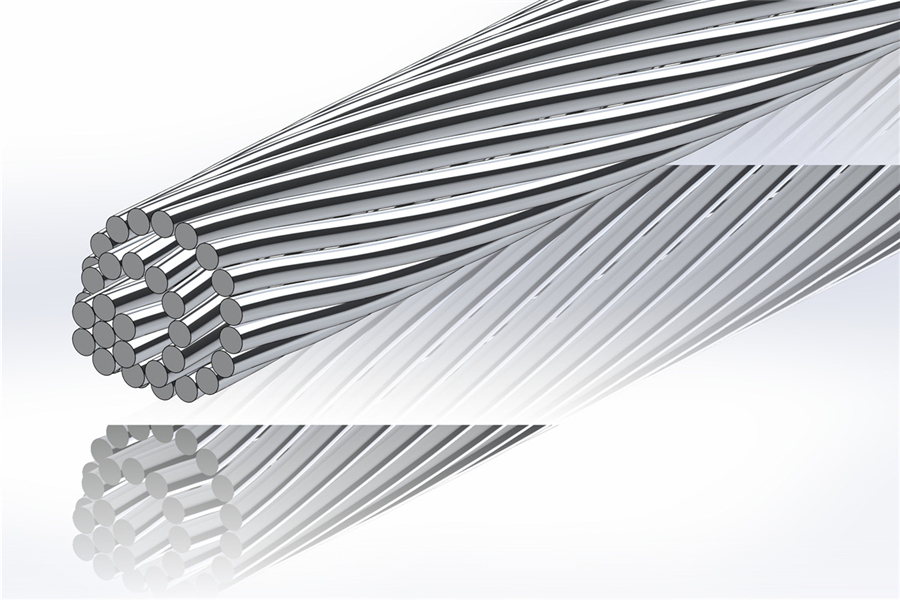
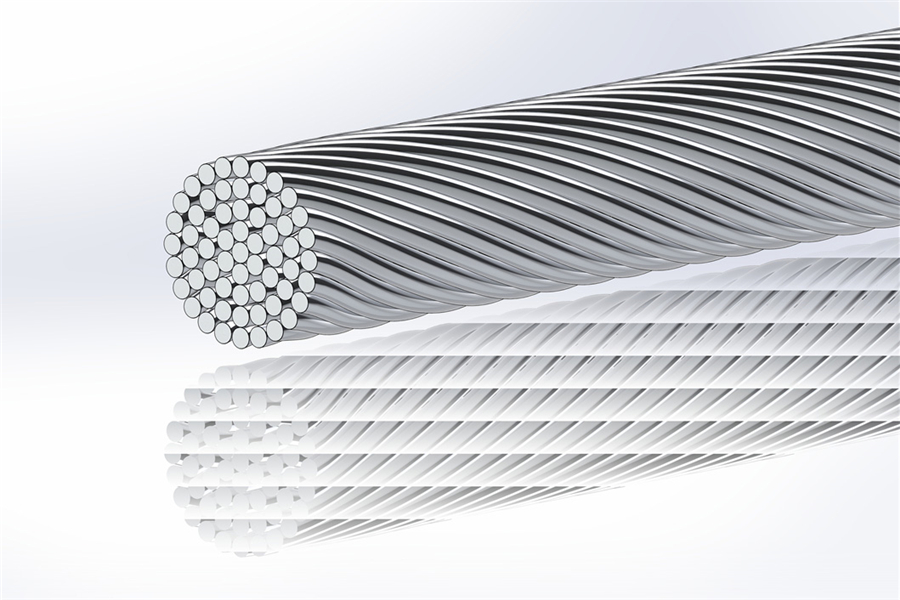
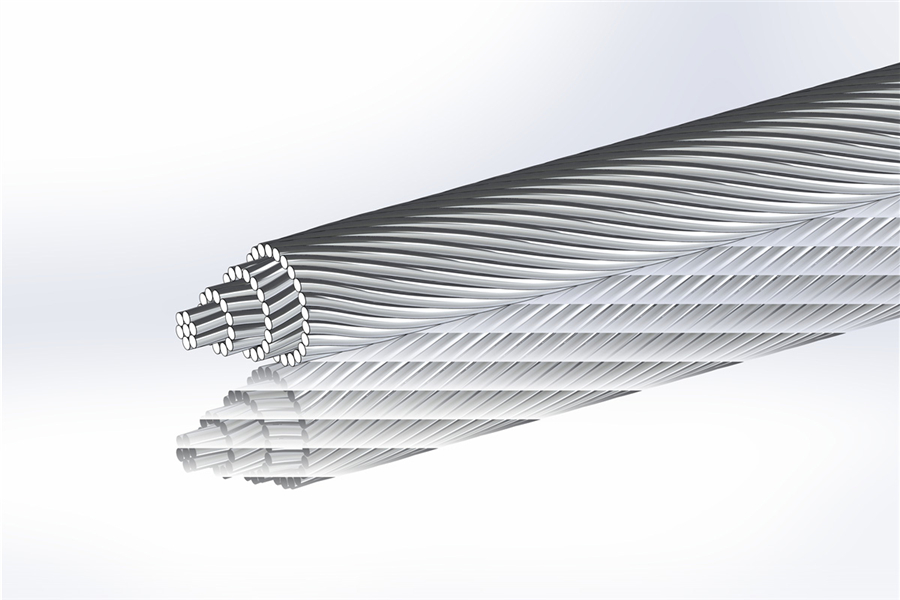
China AAC AS 1513 All-Aluminum Conductor Suppliers and Factory for Reliable Power Transmission Solutions
container
heading-type-1
div容器
| Code Name | Sectional Area | Wire Diameter & Stranding | Diameter of Conductor | Nominal Breaking Load | Linear Mass | Maximum Resistance at 20℃ | |
|---|---|---|---|---|---|---|---|
| mm² | mm | No. | mm | kN | kg/km | Ω/km | |
| Leo | 34.36 | 2.5 | 7 | 7.5 | 5.71 | 94.1 | 0.833 |
| Leonids | 41.58 | 2.75 | 7 | 8.25 | 6.72 | 113.9 | 0.689 |
| Libra | 49.48 | 3 | 7 | 9 | 7.98 | 135.5 | 0.579 |
| Mars | 77.31 | 3.75 | 7 | 11.25 | 11.8 | 211.7 | 0.370 |
| Mercury | 111.33 | 4.5 | 7 | 13.5 | 16.9 | 304.9 | 0.258 |
| Moon | 124.04 | 4.75 | 7 | 14.25 | 18.9 | 339.7 | 0.232 |
| Neptune | 157.62 | 3.25 | 19 | 16.25 | 24.7 | 433.7 | 0.183 |
| Orion | 182.80 | 3.5 | 19 | 17.5 | 28.7 | 503.0 | 0.157 |
| Pluto | 209.85 | 3.75 | 19 | 18.75 | 31.9 | 577.4 | 0.137 |
| Saturn | 261.54 | 3 | 37 | 21 | 42.2 | 721.4 | 0.110 |
| Sirius | 306.94 | 3.25 | 37 | 22.75 | 48.2 | 846.6 | 0.094 |
| Taurus | 336.69 | 4.75 | 19 | 33.25 | 51.3 | 928.6 | 0.0857 |
| Triton | 408.65 | 3.75 | 37 | 26.25 | 62.2 | 1127.1 | 0.0706 |
| Uranus | 506.04 | 3.25 | 61 | 75.2 | 29.25 | 1398.5 | 0.0572 |
| Ursula | 586.89 | 3.5 | 61 | 31.5 | 87.3 | 1621.9 | 0.0493 |
| Venus | 673.73 | 3.75 | 61 | 33.75 | 97.2 | 1861.9 | 0.0429 |
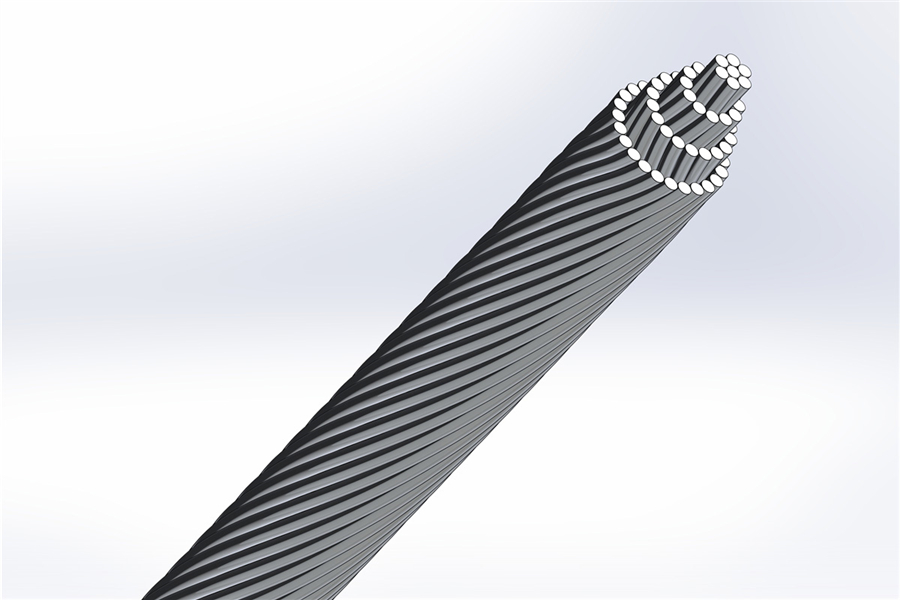
Note: The outermost layer is twisted to the right (Z).
Frequently Asked Questions (FAQ)
What does AAC stand for and where is it commonly used?
AAC stands for All Aluminum Conductor. It consists of refined aluminum strands and is predominantly used in overhead power transmission and distribution lines in urban areas with short spans and high conductivity requirements.
What is the significance of the "Z" direction for the outermost layer?
A "Z" lay direction indicates that the strands on the outermost layer are twisted in a right-hand helical direction. Standardizing the direction of the lay ensures uniform tension, prevents unwinding during installation, and maintains compatibility with standard tension clamps and fittings.
How do code names like Leo, Mars, and Venus function?
Standardized code names correspond to specific physical and electrical conductor designs (wire count, diameter, cross-sectional area). They simplify technical communication, tendering, and ordering across engineering and utility industries worldwide.
Why is maximum electrical resistance specified at 20°C?
20°C (68°F) serves as the internationally recognized standard reference temperature for electrical conductivity tests. Specifying DC resistance at 20°C enables uniform electrical loss calculations, system efficiency evaluations, and voltage drop modeling.
How does stranding configuration affect nominal breaking load and flexibility?
Conductors with a higher number of individual wires (such as 37 or 61 strands) provide greater flexibility and higher cross-sectional areas, facilitating higher nominal breaking loads (kN) while remaining manageable during field handling and overhead installation.