


 +86 13777722188


0102030405
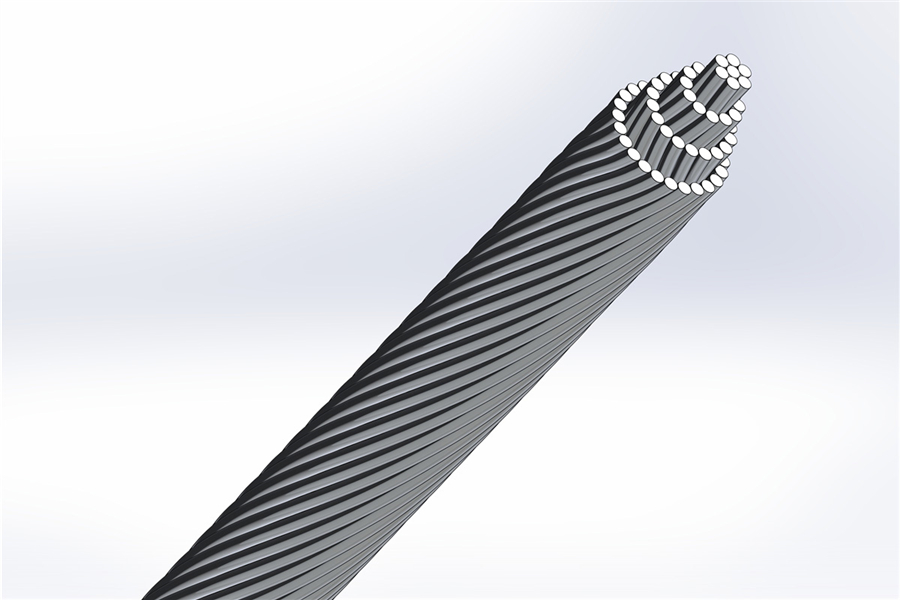
China AAAC All Aluminum Alloy Conductor Suppliers | Factory Direct Cost-Effective Electrical Solution
container
heading-type-1
div容器
| Aluminum Alloy Conductor (AAAC) | ||||||||||
|---|---|---|---|---|---|---|---|---|---|---|
| Code Name | Old Code Name | Sectional Area | Wire Diameter & Stranding | Overall Diameter | Nominal Breaking Load | Linear Mass | Maximum Resistance at 20℃ | Modulus of Elasticity | Coefficient of Linear Expansion | |
| mm² | mm | No. | mm | kN | kg/km | Ω/km | N/mm² | 1/K | ||
| 22-AL4 | ASTER 22 | 22.0 | 2.0 | 7 | 6 | 7.15 | 60.2 | 1.4989 | 62000 | 2.3x10⁻⁵ |
| 34-AL4 | ASTER 34.4 | 34.4 | 2.5 | 7 | 7.5 | 11.17 | 94.1 | 0.9593 | 62000 | 2.3x10⁻⁵ |
| 55-AL4 | ASTER 54.6 | 54.6 | 3.15 | 7 | 9.45 | 17.73 | 149.4 | 0.6042 | 62000 | 2.3x10⁻⁵ |
| 76-AL4 | ASTER 75.5 | 75.5 | 2.25 | 19 | 11.25 | 24.55 | 207.9 | 0.4388 | 60000 | 2.3x10⁻⁵ |
| 93-AL4 | ASTER 93.3 | 93.3 | 2.5 | 19 | 12.5 | 30.31 | 256.6 | 0.3551 | 60000 | 2.3x10⁻⁵ |
| 117-AL4 | ASTER 117 | 117.0 | 2.8 | 19 | 14 | 38.02 | 321.9 | 0.2833 | 60000 | 2.3x10⁻⁵ |
| 148-AL4 | ASTER 148 | 148.1 | 3.15 | 19 | 15.75 | 48.12 | 407.4 | 0.2239 | 60000 | 2.3x10⁻⁵ |
| 182-AL4 | ASTER 181.6 | 181.6 | 2.5 | 37 | 17.5 | 59.03 | 500.9 | 0.1831 | 57000 | 2.3x10⁻⁵ |
| 228-AL4 | ASTER 228 | 227.8 | 2.8 | 37 | 19.6 | 74.04 | 628.4 | 0.1460 | 57000 | 2.3x10⁻⁵ |
| 288-AL4 | ASTER 288 | 288.3 | 3.15 | 37 | 22.05 | 93.71 | 795.3 | 0.1154 | 57000 | 2.3x10⁻⁵ |
| 366-AL4 | ASTER 366 | 366.2 | 3.55 | 37 | 24.85 | 115.36 | 1010.1 | 0.0908 | 57000 | 2.3x10⁻⁵ |
| 570-AL4 | ASTER 570 | 570.2 | 3.45 | 61 | 31.05 | 185.33 | 1575.0 | 0.0585 | 54000 | 2.3x10⁻⁵ |
| 851-AL4 | ASTER 851 | 850.7 | 3.45 | 91 | 37.95 | 276.47 | 2360.6 | 0.0394 | 52500 | 2.3x10⁻⁵ |
| 1144-AL4 | ASTER 1144 | 1143.5 | 4 | 91 | 44 | 360.22 | 3173.2 | 0.0293 | 52500 | 2.3x10⁻⁵ |
| 1600-AL4 | ASTER 1600 | 1595.9 | 4 | 127 | 52 | 502.72 | 4427.5 | 0.0210 | 50500 | 2.3x10⁻⁵ |
Note: The outermost layer is twisted to the Left (S).
Frequently Asked Questions (FAQ)
What is an Aluminum Alloy Conductor (AAAC)?
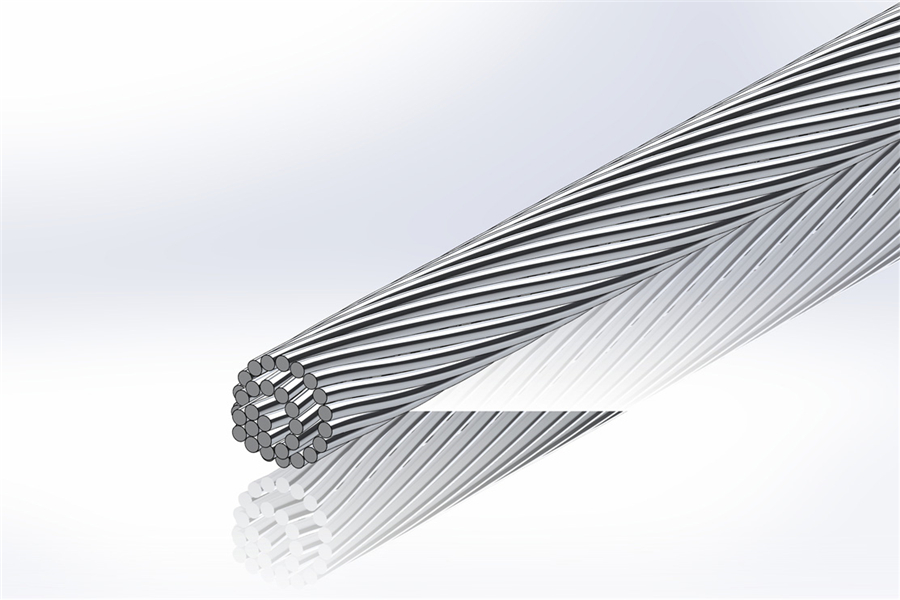
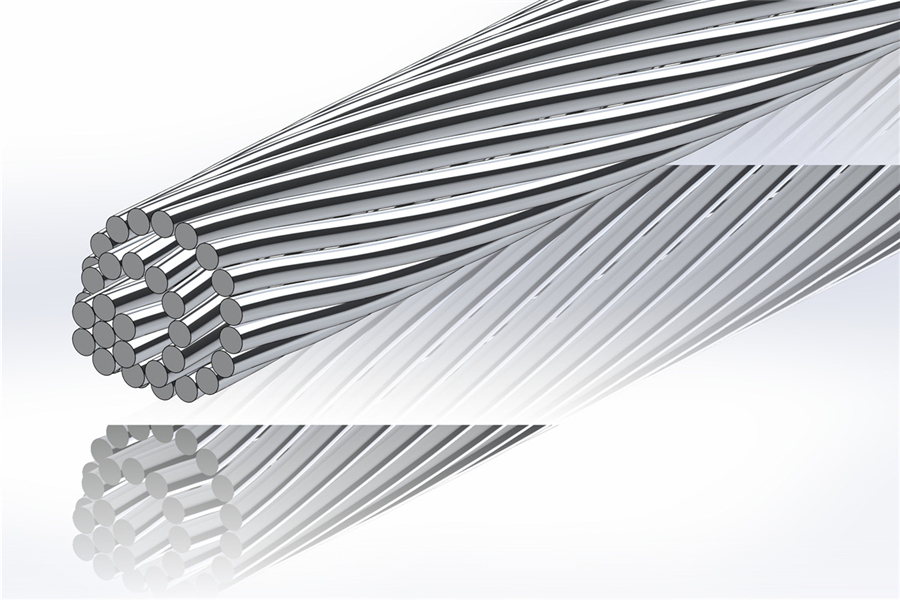
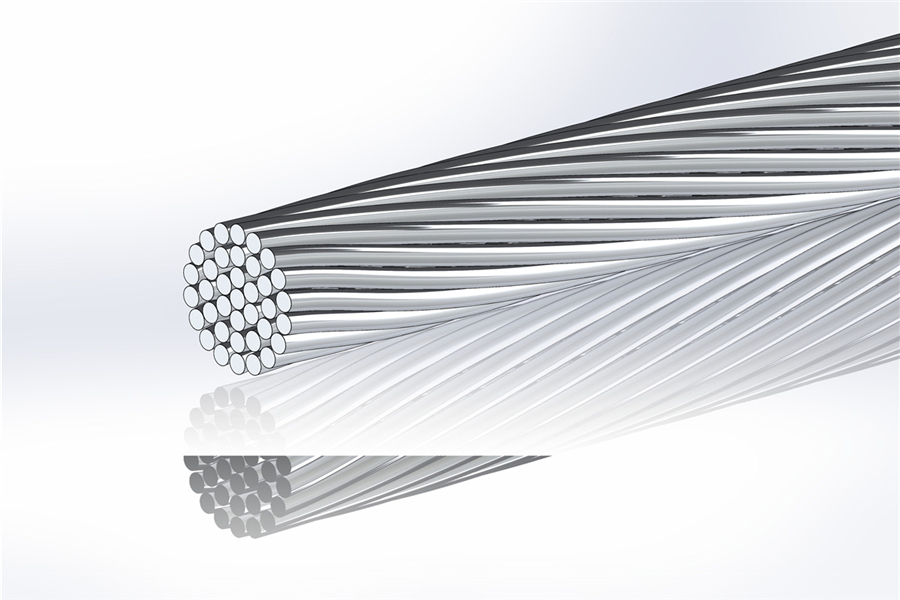
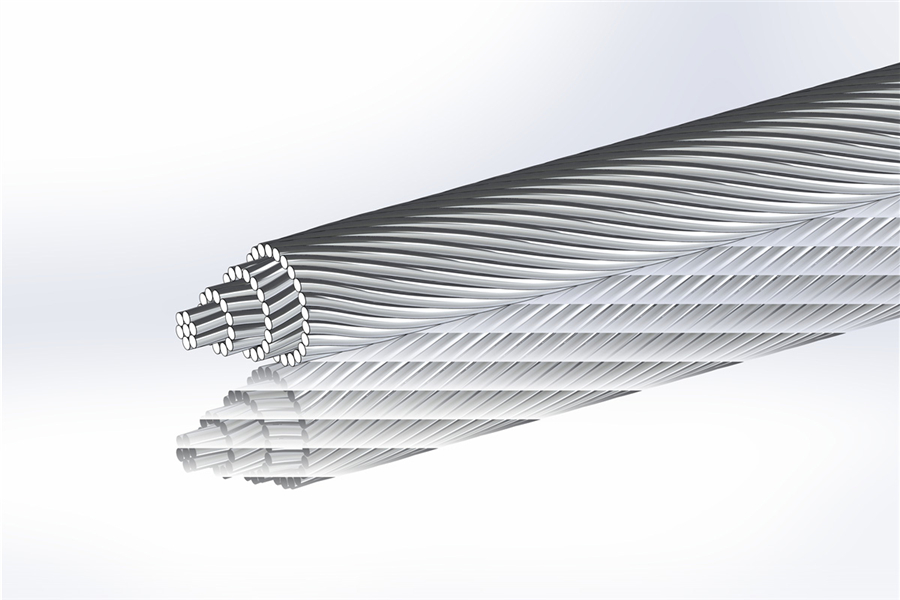
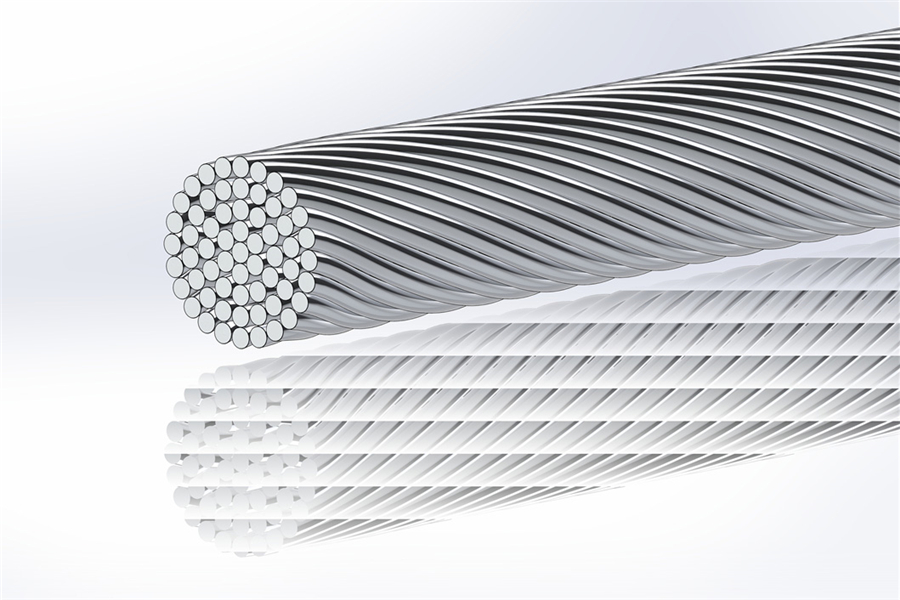
AAAC is a high-strength concentric-lay-stranded conductor made from heat-treated aluminum-magnesium-silicon alloy. It offers high electrical conductivity, excellent strength-to-weight ratio, and outstanding corrosion resistance compared to traditional ACSR conductors.
What does the "ASTER" code name represent?
"ASTER" is the traditional standard designation (such as ASTER 22, ASTER 570) under French and international overhead line standards (NF C 34-125), identifying the nominal cross-sectional area and alloy type (AL4).
What is the lay direction for AAAC Aster conductors?
The standard manufacturing lay direction for the outermost layer of these conductors is twisted to the Left-hand lay (S-direction), which ensures structural consistency and stable joint performance during installation.
What are the main advantages of using AAAC over ACSR?
AAAC provides superior resistance to corrosion in coastal and industrial areas, eliminates bimetallic corrosion between steel and aluminum, reduces power loss due to magnetic hysteresis, and features a lighter total weight for simpler installation.
Where are AAAC Aster conductors typically installed?
They are predominantly used as bare overhead transmission and primary/secondary distribution cables on aerial electrical power lines where long spans, light structural loading, and high environmental resistance are required.
How does temperature affect the electrical resistance of the conductor?
The technical specifications list the maximum direct-current (DC) resistance measured at 20°C. Operating at higher ambient or loading temperatures will increase line resistance proportionally based on the temperature coefficient of the aluminum alloy.