


 +86 13777722188


0102030405
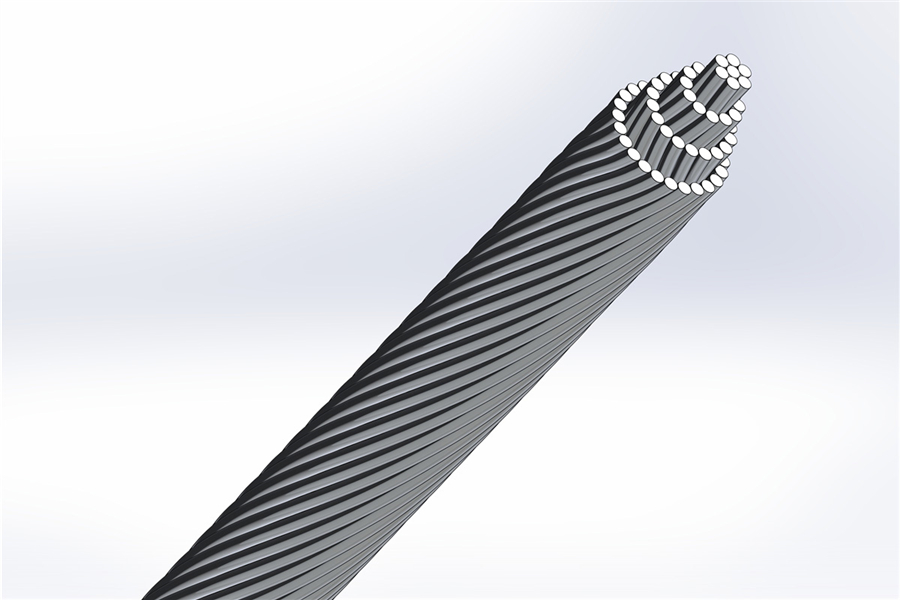
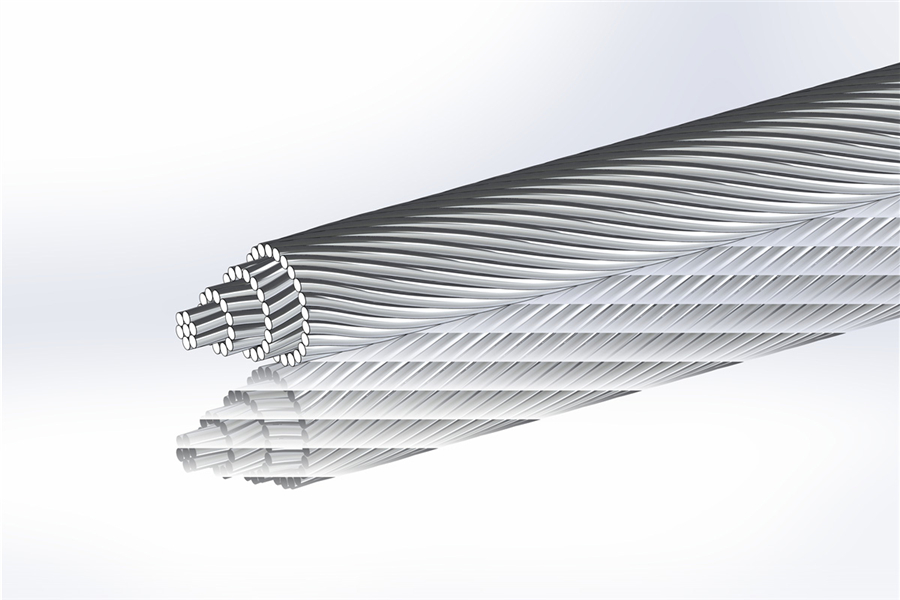
China AAAC All Aluminum Alloy Conductor Suppliers - BS EN 50182, BS 3242 | High-Strength Factory Solutions
container
heading-type-1
div容器
Technical Specifications
| Aluminum Alloy Conductor (AAAC) | ||||||||
|---|---|---|---|---|---|---|---|---|
| Code Name | Old Code Name | Sectional Area | Wire Diameter & Stranding | Diameter of Conductor | Nominal Breaking Load | Linear Mass | Maximum Resistance at 20℃ | |
| mm² | mm | No. | mm | kN | kg/km | Ω/km | ||
| 19-AL3 | BOX | 18.8 | 1.85 | 7 | 5.55 | 5.55 | 51.5 | 1.748 |
| 24-AL3 | ACACIA | 23.8 | 2.08 | 7 | 6.24 | 7.02 | 65.1 | 1.3828 |
| 30-AL3 | ALMOND | 30.1 | 2.34 | 7 | 7.02 | 8.88 | 82.4 | 1.0926 |
| 35-AL3 | CEDAR | 35.5 | 2.54 | 7 | 7.62 | 10.46 | 97.1 | 0.9273 |
| 42-AL3 | DEODAR | 42.2 | 2.77 | 7 | 8.31 | 12.44 | 115.5 | 0.7797 |
| 48-AL3 | FIR | 47.8 | 2.95 | 7 | 8.85 | 14.11 | 131.0 | 0.6875 |
| 60-AL3 | HAZE | 59.9 | 3.30 | 7 | 9.9 | 17.66 | 164.0 | 0.5494 |
| 72-AL3 | PINE | 71.6 | 3.61 | 7 | 10.83 | 21.14 | 196.2 | 0.4591 |
| 84-AL3 | HOLLY | 84.1 | 3.91 | 7 | 11.73 | 24.79 | 230.2 | 0.3913 |
| 90-AL3 | WILLOW | 89.7 | 4.04 | 7 | 12.12 | 26.47 | 245.7 | 0.3665 |
| 119-AL3 | OAK | 118.9 | 4.65 | 7 | 13.95 | 35.07 | 325.5 | 0.2767 |
| 151-AL3 | MULBERRY | 150.9 | 3.18 | 19 | 15.9 | 44.52 | 415.2 | 0.2192 |
| 181-AL3 | ASH | 180.7 | 3.48 | 19 | 17.4 | 53.31 | 497.3 | 0.1830 |
| 211-AL3 | ELM | 207.6 | 3.73 | 19 | 18.65 | 62.24 | 571.3 | 0.1568 |
| 239-AL3 | POPLAR | 239.4 | 2.87 | 37 | 20.09 | 70.61 | 660.2 | 0.1387 |
| 303-AL3 | SYCAMORE | 303.2 | 3.23 | 37 | 22.61 | 89.4 | 836.2 | 0.1095 |
| 362-AL3 | UPAS | 362.1 | 3.53 | 37 | 24.71 | 106.82 | 998.8 | 0.0917 |
| 422-AL3 | WALNUT | 421.8 | 3.81 | 37 | 26.67 | 118.17 | 1163.5 | 0.0786 |
| 479-AL3 | YEW | 479.0 | 4.06 | 37 | 28.42 | 141.31 | 1321.2 | 0.0693 |
| 498-AL3 | TOTARA | 498.1 | 4.14 | 37 | 28.98 | 146.93 | 1373.8 | 0.0666 |
| 587-AL3 | RUBUS | 586.9 | 3.50 | 61 | 31.5 | 173.13 | 1620.9 | 0.0567 |
| 659-AL3 | SORBUS | 659.4 | 3.71 | 61 | 33.39 | 194.53 | 1821.3 | 0.0505 |
| 821-AL3 | ARAUCARIA | 821.1 | 4.14 | 61 | 37.26 | 242.24 | 2267.9 | 0.0406 |
| 996-AL3 | REDWOOD | 996.2 | 4.56 | 61 | 41.04 | 293.88 | 2751.5 | 0.0334 |
| Note: The outermost layer is twisted to the right (Z). | ||||||||
Frequently Asked Questions (FAQ)
Q
What does AAAC stand for in overhead electrical lines?
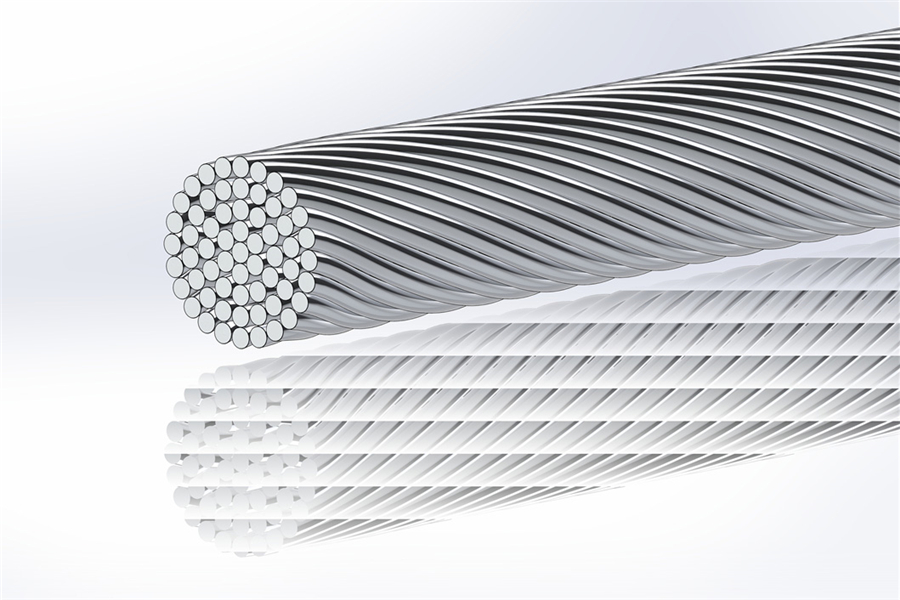
AAAC stands for All Aluminium Alloy Conductor. It is made from high-strength aluminium-magnesium-silicon alloy wires, offering enhanced mechanical strength and superior corrosion resistance compared to standard all-aluminium conductors (AAC).
Q
What is the significance of the conductor code names such as BOX, OAK, or REDWOOD?
These tree-based code names represent standard industry designations primarily derived from British Standards (BS) to facilitate easy specification, ordering, and communication of dimensional and physical parameters without confusion.
Q
What does the note "The outermost layer is twisted to the right (Z)" mean?
It designates the lay direction of the external strand layer. A right-hand lay (denoted as "Z" lay) ensures compatibility with standard conductor fittings, accessories, and preformed wire grips during overhead line installation.
Q
How does increasing cross-sectional area affect the nominal breaking load and resistance?
As the sectional area increases from 18.8 mm² (BOX) to 996.2 mm² (REDWOOD), the nominal breaking load increases significantly from 5.55 kN up to 293.88 kN, while the electrical DC resistance decreases from 1.748 Ω/km down to 0.0334 Ω/km.
Q
Why is maximum resistance evaluated specifically at 20℃?
20℃ is the internationally recognized reference temperature for specifying electrical resistance in conductive metals. Testing at this baseline allows engineers to normalize measurement values and accurately compute line losses under varying operational temperature loads.