Leave Your Message
0%

Picking the right Insulated Wire can make a huge difference in whether your project runs safely, efficiently, and keeps working reliably over the years. When shopping around globally, you'll find a ton of options—PVC, XLPE, rubber, silicone, PTFE, enamelled, mineral-insulated, armored wires—the list goes on. Each of these reacts differently to things like heat, moisture, chemicals, vibrations, bending, and electrical loads, so it’s not a one-size-fits-all deal.

In this guide, we’ll look at ten popular types of Insulated Wire, using practical criteria that actually matter when you’re buying. We’ll consider stuff like the conductor material, insulation qualities, temperature limits, voltage capacities, flexibility, installation conditions, and how long they typically last. For example, a wire inside a control cabinet probably has different needs than one buried underground or near heavy machinery. Details really do matter—something like a stiff jacket can slow you down during installation, and if the insulation isn’t resistant enough to abrasion, your wire might fail sooner than expected.

And here’s a little reality check: having all the technical specs doesn’t automatically mean you’ve made the right choice. It’s smart to dig into test reports, traceability info, batch consistency, and how quality is controlled by the manufacturer. Standards like IEC, UL, CSA, or regional certifications are important, but keep in mind that acceptance rules can differ depending on where you’re working. In other words, always verify what you’re getting. No single type of wire is perfect for every single project.

Sometimes, it’s worth thinking things through a bit more—going for a cheaper wire might save you money upfront, but it could mean higher labor costs, more replacements, or just more downtime down the line. On the flip side, paying extra for high-end insulation might be unnecessary if you’re just installing it indoors for a simple job. This overview is meant to give you a clearer picture so you can make smarter choices, but it shouldn’t replace a proper engineering review. Before placing your order, double-check the wire’s size, markings, certifications, environmental ratings, and ensure it's compatible with your final equipment. Better safe than sorry, right?
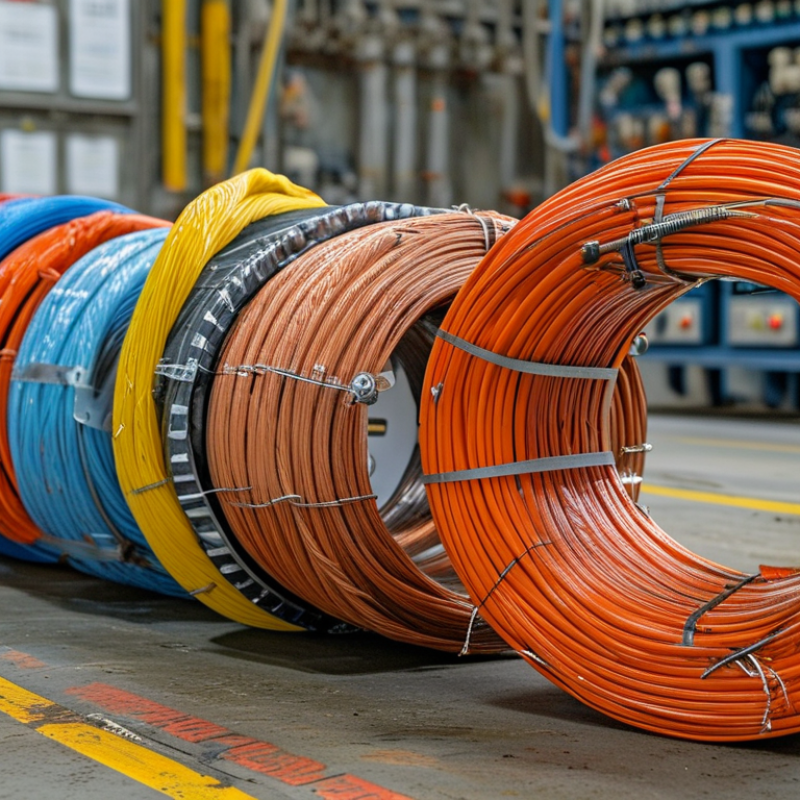
Top 10 Types of Insulated Wire for Global Buyers

Insulated Wire Taxonomy: 10 Types by Material and IEC 60228 Conductor Classes

Top 10 Types of Insulated Wire for Global Buyers

A practical taxonomy starts with conductor construction, not color or voltage label. IEC 60228 defines Class 1 as solid, Class 2 as rigid stranded, Class 5 as flexible, and Class 6 as extra-flexible.

The insulation material affects heat, moisture, abrasion, and chemical resistance. The conductor class affects bending behavior and installation effort.

Ten common types include solid copper/PVC Class 1 stranded copper/PVC Class 2 flexible copper/PVC Class 5 extra-flexible tinned copper/PVC Class 6 copper/XLPE Class 2 copper/EPR Class 5 copper/silicone Class 6 aluminum/PVC Class 2 aluminum/XLPE Class 2 copper/PE Class 1 or Class 2.

The International Energy Agency’s Global EV Outlook 2024 reported nearly 14 million electric car sales in 2023. That growth increases demand for compact, vibration-resistant, and thermally stable wire assemblies.

However, Class 6 is not automatically better. It usually costs more and may require careful termination. In field purchasing, a flexible conductor can fail early if its bend radius is ignored. A neat taxonomy can hide a difficult choice.

Tips:

Confirm the required IEC 60228 class, conductor metal, insulation temperature rating, voltage rating, and test documentation. Check the actual bending radius. Ask for traceable test results, not only a catalog statement. Small details matter.

PVC-Insulated Wire: IEC 60227 Voltage Classes up to 450/750 V

PVC-Insulated Wire remains a practical choice for fixed electrical installations worldwide. Under IEC 60227, common voltage classes include 300/300 V, 300/500 V, and 450/750 V. The 450/750 V class suits building wiring, control circuits, and protected industrial routes. It is not automatically safer for every application.

IEC 60227 cable designs usually combine copper conductors with PVC insulation. Many versions support conductor temperatures near 70°C during normal operation. Actual performance depends on conductor size, installation method, ambient heat, and grouping. The International Energy Agency’s Electricity 2024 report projected global electricity demand to grow by 4% in 2024. It expected average annual growth of 3.4% through 2026. Grand View Research’s 2024 industry assessment valued the globAl Wire and cable market above USD 200 billion in 2023. More infrastructure means more purchasing pressure, but volume should not replace verification.

Tips: Ask for IEC 60227 compliance evidence, conductor resistance results, flame-test records, and batch traceability. Check the printed voltage rating carefully. A neat label can still hide weak documentation. For damp, high-temperature, or outdoor routes, PVC may need another insulation system. I would not select wire by voltage alone; that shortcut often looks efficient until installation limits appear. Review current capacity, bending space, sheath requirements, and local electrical rules before approval.

XLPE and EPR Wire: IEC 60502-1 Rated Voltage Classes of 1 and 3 kV

Global electricity demand is forecast to grow by about 4% annually from 2024 to 2026, according to the IEA Electricity 2024 report. This expansion increases demand for dependable medium-voltage and low-Voltage Cable systems. For buyers,IEC 60502-1 is a practical starting point. Its common 1 kV and 3 kV configurations appear as 0.6/1 kV and 1.8/3 kV ratings.

Xlpe Insulation offers low dielectric losses, strong thermal stability, and a typical continuous conductor temperature of90°C. EPR insulation is more flexible and often performs well in humid or mechanically demanding installations. Both materials require correct sizing. The insulation alone cannot solve poor heat dissipation.

Small details matter.

Confirm the rated voltage notation, conductor class, installation temperature, bending radius, and short-circuit rating. A 1.8/3 kV cable is not automatically suitable for every 3 kV application. System earthing and transient conditions also deserve review. IEC 60502-1 compliance should be supported by routine test records and traceable technical documentation.

The IEA Electricity Grids and Secure Energy Transitions report estimates that annual grid investment must exceed 600 billion US dollars by 2030. That pressure may encourage faster procurement, but rushed selection creates avoidable failures. Buyers should compare XLPE and EPR using the complete installation design, not catalogue temperature figures alone. In real projects, cable trays become crowded, ventilation changes, and calculations need revisiting. That part is often underestimated.

PTFE, FEP, and ETFE Wire: 200°C-Plus High-Temperature Applications

For global buyers, PTFE, FEP, and ETFE wires serve demanding high-temperature applications. PTFE is the strongest choice for continuous exposure near 260°C. It resists oils, solvents, moisture, and many corrosive chemicals. FEP usually supports continuous temperatures around 200°C, while offering easier processing and clearer insulation. ETFE provides excellent abrasion and cut resistance. However, many ETFE constructions are not designed for continuous 200°C service. Check the exact datasheet, conductor size, voltage rating, and exposure time before ordering.

In practical equipment, PTFE wire suits furnace sensors, aerospace harnesses, and compact control cabinets. FEP works well where chemical resistance and flexible routing matter. ETFE is useful near moving parts, sharp edges, or repeated handling. Insulation thickness affects heat transfer and flexibility. Small conductors can also heat faster under load. A wire rated at 200°C may still require current derating inside a crowded enclosure. Ratings vary by construction. That detail is easy to miss.

Tips: Ask for continuous and peak temperature ratings separately. Confirm bend radius after installation. Request test reports against applicable IEC or UL requirements. Inspect samples after heat aging, not only when new. Do not assume a familiar polymer guarantees performance; termination quality can become the weakest point. I have seen otherwise suitable wire fail because connectors were rated lower than the insulation. Recheck the complete assembly.

Silicone, Rubber, and PUR Wire: Flexible Designs from −60°C to 180°C

Top 10 Types of Insulated Wire for Global Buyers

Silicone, rubber, and PUR wires support equipment exposed to movement, heat, oil, and cold.

Other common types include PVC, XLPE, PE, PTFE, FEP, ETFE, and mineral-Insulated Wire.

Silicone insulation remains flexible near 180°C and can tolerate temperatures close to −60°C, depending on construction.

Rubber wire offers strong abrasion resistance for outdoor tools and industrial machinery.

PUR wire bends repeatedly without cracking, making it suitable for robotic arms, drag chains, and mobile equipment.

The International Energy Agency’s Electricity 2024 report projects global electricity demand to grow by an average of 3.2% annually through 2026. This expansion increases demand for reliable cables in factories, transport systems, and renewable-energy equipment.

Choosing insulation requires more than checking the temperature range. Buyers should examine voltage, bending cycles, chemical exposure, flame behavior, and conductor size. A cable that survives heat may still fail under constant twisting.

Details matter. A cold warehouse can make ordinary PVC stiff. Oil mist can swell unsuitable rubber. PUR often costs more, but replacement downtime may cost more.

IEC 60245 and IEC 60227 provide useful reference points for flexible cable selection, though local approvals remain essential.

My practical concern is often overlooked: suppliers may publish peak temperature, not continuous operating temperature. Ask for test conditions, aging data, and batch traceability. Marketing claims are not field evidence. Test samples under real motion and temperature cycles before purchasing large volumes.

Mineral-Insulated Wire: IEC 60702-1 Rated Voltages up to 750 V

Among the top 10 insulated wire types, mineral-insulated wire serves demanding electrical environments. It uses a metal sheath and compacted magnesium oxide insulation. Copper conductors carry power inside the dense mineral layer. There is no organic polymer jacket to soften quickly near heat sources. IEC 60702-1 covers mineral-insulated cables and terminations for rated voltages up to 750 V. This rating must match the complete installation, not only the cable label.

The design suits furnaces, industrial panels, emergency circuits, and areas exposed to fire risk. Its metal sheath can resist flames, radiation, moisture, and mechanical contact when correctly installed. It also keeps a small outside diameter, which helps inside crowded conduits. Strong performance comes with careful handling. Bending too sharply can damage the insulation structure. A poorly sealed end may absorb moisture and reduce insulation resistance.

Global buyers should request conductor material, sheath grade, diameter tolerance, temperature limits, and test records. Ask for insulation resistance results after bending and termination. The termination matters more than many purchasing teams expect. An experienced installer should remove moisture, fit suitable seals, and verify continuity before energizing. I would not rely on a generic “fireproof” claim. Some specifications look impressive but omit installation conditions. Mineral-insulated wire is durable, yet it is not careless-installation proof. Supplier documentation should identify IEC 60702-1 compliance, voltage rating, inspection methods, and traceable batch information.

Global Selection Standards: AWG, IEC 60228, RoHS, REACH, and UL 758

Top 10 Types of Insulated Wire for Global Buyers

Global buyers commonly compare PVC, XLPE, PE, PUR, silicone, PTFE, fiberglass, rubber, TPU, and LSZH insulated wire. Each type handles heat, chemicals, movement, or flame exposure differently. The conductor choice matters too. AWG sizes support North American purchasing, while IEC 60228 defines metric conductor areas and conductor classes. They are not direct substitutes. A 16 AWG request may need careful conversion before approving a metric design.

UL 758 is important for appliance wiring materials used inside equipment. It can involve insulation thickness, temperature ratings, voltage ratings, and construction details. RoHS helps control restricted substances in electrical products. REACH addresses chemical substances and supply-chain duties. These requirements should be checked with current declarations and test records. A printed compliance statement alone is weak evidence. Ask for material composition, batch traceability, and applicable test reports. Details matter.

Tips: Confirm voltage, temperature, bending radius, and installation space before selecting insulation. Check whether the wire needs oil resistance or low smoke performance. Do not assume a familiar cable works globally. A neat specification can still fail in a hot cabinet. Review the finished assembly, not only the wire. Selection sometimes needs revision after testing. That is normal. Keep the uncertainty visible, especially when AWG, IEC 60228, and UL 758 requirements overlap.

Top 10 Types of Insulated Wire for Global Buyers - Global Selection Standards: AWG, IEC 60228, RoHS, REACH, and UL 758

No. Insulated Wire Type Typical Insulation Typical AWG Range IEC 60228 Conductor Class Typical Temperature Rating Typical Voltage Rating Common Compliance / Construction Reference Typical Applications
1 PVC Hook-Up Wire PVC, commonly with a flexible stranded copper conductor 30–10 AWG Class 5 or Class 6 for flexible designs; Class 2 for solid designs 80–105°C, depending on construction Typically 300–600 V UL 758 appliance wiring styles may apply; RoHS and REACH documentation commonly requested Internal wiring of appliances, control panels, instruments, and low-voltage assemblies
2 XLPE Insulated Wire Cross-linked polyethylene 26–4/0 AWG Class 2 for fixed wiring; Class 5 for flexible versions Typically 90°C continuous service 600 V to 1,000 V in common low-voltage designs IEC 60228 conductor sizing; product-specific IEC or national cable standards; RoHS and REACH declarations Power distribution, photovoltaic assemblies, industrial equipment, and building wiring
3 Silicone Rubber Wire Silicone elastomer with tinned or bare copper conductor 30–4 AWG Usually Class 5 or Class 6 Typically −60°C to +180°C; some constructions are rated differently Typically 300–600 V UL 758 styles may apply; RoHS and REACH compliance normally verified by material documentation High-temperature equipment, lighting, ovens, motors, battery packs, and flexible connections
4 PTFE Insulated Wire Polytetrafluoroethylene 30–2 AWG Class 5 or Class 6 in flexible constructions Typically −65°C to +200°C Typically 300–600 V Product-specific UL 758 style or aerospace/industrial specification; RoHS and REACH status must be confirmed for the complete wire Chemical processing, aerospace equipment, laboratory instruments, and high-temperature control wiring
5 FEP Insulated Wire Fluorinated ethylene propylene 30–2 AWG Usually Class 5 or Class 6 Typically −65°C to +200°C Typically 300–600 V UL 758 appliance wiring constructions may apply; RoHS and REACH declarations commonly required Chemical-resistant wiring, sensors, heaters, semiconductor equipment, and compact assemblies
6 ETFE Insulated Wire Ethylene tetrafluoroethylene 28–2 AWG Class 5 or Class 6 for flexible designs Typically −65°C to +150°C Typically 300–600 V Product-specific UL 758 or equipment standard; RoHS and REACH confirmation recommended Automotive, aerospace, robotics, instrumentation, and applications requiring thin, tough insulation
7 TPU Insulated Wire Thermoplastic polyurethane 30–4 AWG Typically Class 5 or Class 6 Commonly −40°C to +90°C Typically 300–600 V UL 758 construction may apply; RoHS and REACH material declarations are commonly specified Drag chains, robotics, portable tools, sensors, and applications requiring abrasion and oil resistance
8 LSZH Insulated Wire Low-smoke, halogen-free thermoplastic or cross-linked compound 26–4/0 AWG Class 2 for fixed installations; Class 5 for flexible versions Typically 70–90°C Typically 300–1,000 V IEC 60228 conductor classes; IEC 60754 and IEC 61034 may be relevant; RoHS and REACH documentation commonly required Public buildings, rail systems, data centers, tunnels, and confined spaces where low smoke is important
9 PVC Automotive Wire Automotive-grade PVC over stranded copper 26–8 AWG Usually Class 5 for harness flexibility Commonly 80–105°C, depending on the automotive specification Typically 60 V DC or 300 V, depending on the wire family Automotive wire specifications vary by market; UL 758 is not automatically applicable; RoHS and REACH status should be checked Vehicle harnesses, control circuits, lighting, actuators, and accessory wiring
10 Enamelled Magnet Wire Thin polymer enamel film, commonly polyester, polyesterimide, or polyamideimide Approx. 10–40 AWG equivalent diameter range IEC 60228 is generally not the primary product standard for magnet wire Typically 155–220°C thermal class, depending on enamel system Rated by insulation system and dielectric requirements rather than a general cable voltage class IEC 60317 or equivalent magnet-wire specifications may apply; RoHS and REACH declarations are commonly requested; UL 758 is not the default reference Motor windings, transformers, inductors, relays, generators, and electromagnetic coils
Selection note: Ratings shown are typical market ranges, not universal guarantees. Final selection should be based on the exact construction, conductor size, insulation thickness, ambient temperature, voltage, flexing cycle, flammability requirement, and destination-market certification. AWG and IEC 60228 cross-sections are not always direct one-to-one equivalents.

FAQS

: Which wire insulation suits continuous temperatures near 260°C?

: PTFE is usually the strongest choice for continuous exposure near 260°C. It resists oils, solvents, moisture, and many corrosive chemicals. Check the exact construction first.

When is FEP wire a practical option?

FEP generally supports continuous temperatures around 200°C. It offers chemical resistance, flexible routing, and clearer insulation. Confirm the temperature rating and processing details before ordering.

Can ETFE wire operate continuously at 200°C?

Not always. Many ETFE constructions are not designed for continuous 200°C service. ETFE is valuable near sharp edges, moving parts, and repeated handling. Review the datasheet, exposure time, and conductor size carefully.

What wire works well in moving equipment?

PUR wire suits robotic arms, drag chains, and mobile equipment. It bends repeatedly without cracking. Rubber wire provides strong abrasion resistance for outdoor tools and machinery. Real bending cycles still matter.

Is silicone wire suitable for hot and cold environments?

Silicone insulation can remain flexible near 180°C. Depending on construction, it may tolerate temperatures close to −60°C. It fits equipment facing wide temperature changes. The exact limit may vary.

Does temperature rating alone determine wire suitability?

No. Buyers should also check voltage, conductor size, bending cycles, chemicals, and flame behavior. Small conductors can heat faster under load. Crowded enclosures may require current derating.

Why can suitable insulation still fail in service?

Terminations and connectors may have lower temperature ratings than the insulation. A wire can survive heat while its connector deteriorates. Check the complete assembly, including bend radius after installation. I have seen this detail overlooked.

How should buyers verify supplier temperature claims?

Ask for continuous and peak ratings separately. Request test conditions, heat-aging data, and batch traceability. Inspect samples after realistic temperature and motion cycles. New samples can look perfect.

When should buyers consider flexible cable over ordinary PVC?

Flexible silicone, rubber, or PUR cable suits movement, cold, heat, or oil exposure. Ordinary PVC may become stiff in a cold warehouse. Unsuitable rubber may swell in oil mist. Cost matters, but downtime may matter more.

Conclusion

This guide explains how to select Insulated Wire for different electrical, industrial, and environmental requirements. It classifies ten major types by insulation material and conductor construction, including PVC wire for common low-voltage systems up to 450/750 V, XLPE and EPR wire for 1 kV and 3 kV applications, and PTFE, FEP, and ETFE wire for demanding temperatures above 200°C. It also compares silicone, rubber, and PUR designs, which provide flexibility across temperature ranges from approximately −60°C to 180°C.

The article further introduces mineral-insulated wire, including products with rated voltages up to 750 V, and explains how conductor classes influence flexibility and installation performance. For international purchasing, buyers should evaluate AWG and IEC 60228 sizing, voltage and temperature ratings, mechanical conditions, and compliance with RoHS, REACH, and UL 758 requirements. These criteria help ensure that the selected wire matches the application, operating environment, safety expectations, and regional market regulations.
Olivia

Olivia

Olivia is a dedicated marketing professional with a deep expertise in power transmission and distribution solutions. Her outstanding technical prowess allows her to effectively convey the innovative spirit and high-quality offerings of the company to a global audience. With a keen eye for detail......
Previous 2026 Top Power Wire Types Buyers Need to Know?