

 +86 13777722188
Leave Your Message
-
 WHATSAPP
-
 PHONE
-
 E-MAIL
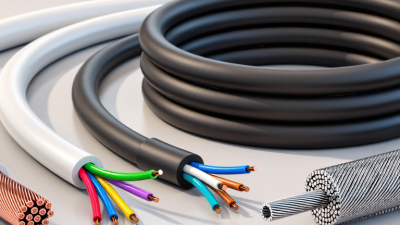
Choosing the right Power Cablein 2026 requires more than matching voltage and conductor size. The cable must suit the installation, load profile, environment, and expected service life. A Cable Selected for a dry indoor panel may fail early in wet soil, high heat, or areas with repeated bending.
William A. Thue, author of Electrical Power Cable Engineering, captures this principle clearly: “A cable system is only as strong as its weakest component.” His observation remains practical today. The conductor, insulation, sheath, termination, and installation method must work as one system. A copper conductor may offer excellent conductivity, while aluminum can reduce weight and material cost. Neither choice is automatically correct. It depends on current demand, distance, voltage drop, and connection quality.
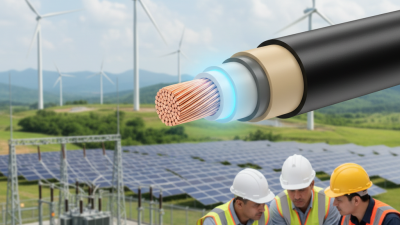
Start with verified project data. Check the continuous load, short-circuit level, ambient temperature, burial depth, and routing distance. Then compare insulation types, including PVC, XLPE, and EPR. Look for documented testing, recognized standards, and clear manufacturer specifications from established suppliers such as Prysmian, Nexans, or Southwire. Details matter. A small bend-radius mistake can damage insulation before energization. Poor termination can create heat that infrared cameras later reveal as a glowing hotspot.
The process is not perfectly simple. Product labels can appear similar, yet their performance may differ significantly. Engineers should review calculations, installation conditions, and maintenance access together. A lower purchase price may become expensive after replacement work. The safest decision combines measured requirements, independent technical review, and realistic field experience. That is how the right Power Cable becomes a dependable part of the entire electrical system.
How to Choose the Right Power Cable in 2026?
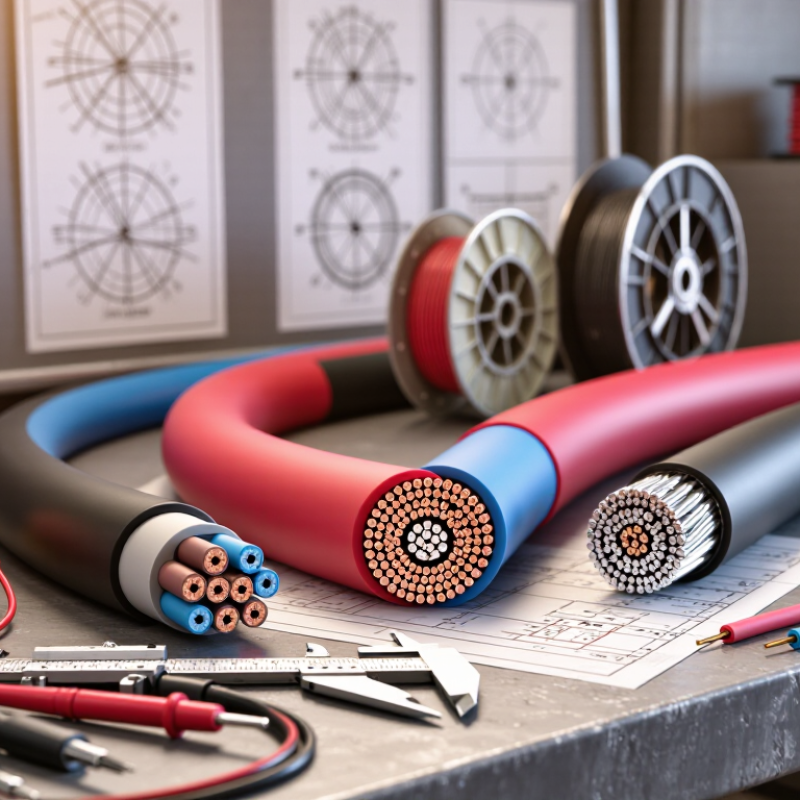
Choosing A Power Cable starts with its purpose, not its appearance. A cable for a fixed indoor machine differs from one used in a moving tool. Write down the voltage, current, load type, installation length, and expected operating hours. Motors may create starting currents that exceed normal readings. I once saw a cable selected only by its continuous current rating. The equipment still tripped during startup. That mistake was avoidable.
The environment can change a cable’s service life dramatically. Outdoor installations may face sunlight, rain, soil chemicals, and temperature swings. Factory floors may add oil, vibration, sharp edges, or repeated bending. Select insulation and protection for these conditions. In wet areas, water resistance and correct sealing matter. In hot spaces, heat reduces the cable’s safe current capacity. Do not hide the cable inside a crowded conduit without checking heat buildup. Small errors matter.
Required performance includes ampacity, voltage drop, short-circuit tolerance, flexibility, and mechanical strength. Calculate voltage drop across the full cable length, especially for low-voltage equipment. Confirm conductor size, insulation temperature rating, grounding needs, and bend radius. Follow applicable electrical codes and installation standards. Ask a qualified electrical professional to review unusual loads or hazardous environments. A tidy specification sheet can still miss real-world movement, heat, or moisture. Recheck the choice after installation conditions become clear.
| Application Purpose | Typical Voltage Range | Recommended Conductor | Common Insulation or Sheath | Installation Environment | Key Performance Requirements | Important Selection Checks | Relevant Standards or References |
|---|---|---|---|---|---|---|---|
| Fixed building wiring | Up to 450/750 V or 0.6/1 kV, depending on the wiring system | Copper or aluminium; solid or stranded conductor according to size and installation method | PVC or low-smoke zero-halogen insulation where reduced smoke and corrosive gas emissions are required | Conduit, trunking, cable tray, walls, ceilings, and service spaces | Suitable current-carrying capacity, voltage-drop control, flame performance, and mechanical protection | Check conductor cross-sectional area, ambient temperature, grouping, installation method, earth-fault protection, and local electrical code | IEC 60227, IEC 60228, IEC 60332 series, IEC 60364, and applicable national wiring rules |
| Industrial motor and machine power | Typically 0.6/1 kV for low-voltage machinery; higher voltages may apply in industrial distribution | Class 2 stranded copper or aluminium; flexible fine-stranded copper for moving machine connections | XLPE, PVC, PUR, or elastomeric insulation and sheath, selected for temperature, oil, and mechanical conditions | Factory floors, cable trays, ducts, control panels, and machinery connections | High current capacity, resistance to vibration and abrasion, electromagnetic compatibility, and reliable termination | Consider starting current, continuous load, harmonics from variable-speed drives, bending radius, oil exposure, and gland compatibility | IEC 60502-1, IEC 60228, IEC 60332 series, IEC 61034, and IEC 60754 where applicable |
| Outdoor Power Distribution | 0.6/1 kV for low-voltage distribution; medium-voltage designs may use 3.6/6 kV to 18/30 kV classes | Stranded copper or aluminium with a conductor size selected for load, voltage drop, and fault current | XLPE insulation with PVC, PE, or low-smoke zero-halogen outer sheath | Outdoor cable trays, poles, substations, ducts, and exposed service routes | UV resistance, moisture resistance, thermal stability, short-circuit withstand, and outdoor ageing resistance | Confirm sunlight exposure, minimum and maximum temperature, wind movement, water ingress, clearance, and termination sealing | IEC 60502-1 for low voltage and IEC 60502-2 for many medium-voltage cable applications |
| Direct-buried power cable | Commonly 0.6/1 kV; higher-voltage versions require a dedicated cable system | Stranded copper or aluminium; conductor size determined by load, soil conditions, and permissible voltage drop | XLPE or PVC insulation with a robust PE, PVC, or armoured outer construction | Buried in soil, ducts, trenches, or areas exposed to moisture and occasional mechanical impact | Water resistance, crush resistance, rodent or impact protection where needed, and suitable thermal performance in soil | Assess burial depth, soil thermal resistivity, drainage, groundwater, backfill, separation from other services, and armouring requirements | IEC 60502 series, IEC 60228, IEC 60332 series, and local underground installation requirements |
| Flexible equipment and portable tools | Commonly 300/500 V or 450/750 V, depending on the cable construction and application | Fine-stranded copper for repeated flexing and easier termination | Flexible PVC, elastomer, rubber, or PUR sheath selected for movement and environmental exposure | Portable tools, temporary power, workshop equipment, generators, and movable machinery | Flexibility, abrasion resistance, bend-cycle durability, oil resistance where required, and strain relief | Check whether the cable is rated for continuous movement, torsion, outdoor use, wet locations, and the equipment’s plug or connector system | IEC 60227, IEC 60245, IEC 60228, and applicable equipment or portable-tool standards |
| Energy-chain and robotic motion | Usually 300/500 V or 0.6/1 kV, depending on the cable design | Extra-fine stranded copper with optimized lay length for continuous flexing | TPE, PUR, special PVC, or other high-flexibility insulation and sheath materials | Energy chains, automated machinery, robotics, pick-and-place systems, and repeated bending routes | High flex-cycle life, low torsional stress, abrasion resistance, oil resistance, and controlled bending radius | Match the cable to travel length, acceleration, speed, bend radius, torsion, cycle frequency, and energy-chain geometry | Manufacturer motion-test data should be reviewed; IEC 60228 and relevant machinery safety requirements remain applicable |
| Solar photovoltaic DC wiring | Commonly 1.0/1.0 kV DC or 1.5/1.5 kV DC for photovoltaic systems, subject to system design | Tinned or bare fine-stranded copper designed for photovoltaic service | Cross-linked, UV-resistant, weather-resistant insulation and sheath; low-smoke and halogen-free constructions are widely used | Rooftops, solar modules, cable trays, outdoor raceways, and exposed DC circuits | UV and ozone resistance, outdoor ageing resistance, low-temperature flexibility, DC voltage rating, and flame performance | Verify connector compatibility, polarity identification, routing away from sharp edges, loop management, temperature derating, and DC arc protection requirements | IEC 62930, EN 50618, IEC 60332 series, and applicable photovoltaic installation rules |
| Battery energy storage and DC systems | Voltage varies widely; common systems may range from extra-low voltage to 1.5 kV DC | Flexible stranded copper; lug and termination design must suit the available fault current | XLPE, PVC, elastomeric, or low-smoke zero-halogen materials selected for the enclosure and thermal conditions | Battery racks, energy-storage containers, power conversion systems, and protected electrical rooms | High short-circuit withstand, DC insulation performance, thermal stability, flame resistance, and controlled smoke emission | Calculate prospective fault current, continuous current, temperature rise, routing separation, polarity protection, and emergency isolation requirements | IEC 60502-1, IEC 60228, IEC 62477-1, IEC 62933 series, and local battery-storage requirements |
| Electric vehicle charging | AC charging commonly uses 230/400 V systems; DC charging voltage depends on the charging architecture | Flexible copper conductors sized for the continuous charging current | Thermoplastic elastomer, rubber, or other flexible materials designed for outdoor and repeated handling | Residential, commercial, fleet, and public charging locations; indoor or outdoor installations | Continuous-load capability, flexing durability, weather resistance, temperature performance, and safe connector operation | Check charging mode, maximum current, cable length, voltage drop, residual-current protection, mechanical protection, and connector compatibility | IEC 61851, IEC 62196, IEC 62893, and applicable installation and protection standards |
| Fire and emergency power circuits | Usually low-voltage distribution levels, commonly up to 0.6/1 kV | Copper or aluminium, depending on the circuit design and local code | Fire-resistant or circuit-integrity cable systems; low-smoke zero-halogen sheaths may be required | Emergency lighting, fire pumps, alarm systems, smoke control equipment, and protected escape routes | Maintained circuit integrity during fire exposure, low smoke, low corrosivity, and secure support systems | Confirm required survival time, support method, separation from normal circuits, fire-stopping, and complete system certification | IEC 60331, IEC 60332, IEC 60754, IEC 61034, and local fire-safety regulations |
| Marine, coastal, and wet-location power | Application-dependent; low-voltage systems commonly use 0.6/1 kV cable classes | Stranded copper, often selected for flexibility and reliable termination in vibrating systems | Oil-resistant, water-resistant, flame-retardant, low-smoke, or halogen-free materials as required | Ships, offshore facilities, coastal infrastructure, wet rooms, and areas exposed to salt spray | Moisture resistance, saltwater resistance, vibration tolerance, flame performance, and corrosion-resistant installation hardware | Check marine approval requirements, bending and vibration, glands, armour bonding, water penetration, and conductor insulation resistance | IEC 60092 series for many shipboard applications, together with project-specific marine rules |
| Medium-voltage utility or industrial feeder | Common IEC cable classes include 3.6/6 kV through 18/30 kV, depending on the network | Stranded compact copper or aluminium with a metallic screen and suitable earth-return path | XLPE insulation with semiconductive screens and a metallic screen, sheath, or armour system | Substations, industrial plants, underground ducts, buried routes, and utility distribution networks | Partial-discharge control, insulation coordination, short-circuit withstand, screen bonding, and reliable stress control | Verify system earthing, installation method, screen arrangement, fault level, jointing accessories, testing, and qualified installation procedures | IEC 60502-2, IEC 60840 for higher-voltage systems, and applicable utility specifications |
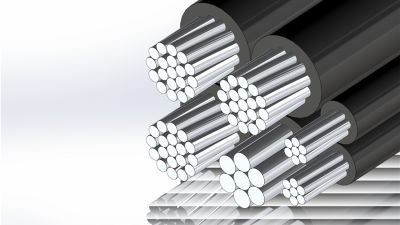
SANS 1418-compliant ABC cable provides an efficient solution for self-supporting aerial power transmission, especially in areas where reliable overhead distribution and practical installation are essential. Designed by an experienced China-based manufacturing facility, the cable combines strong electrical performance with mechanical stability, helping suppliers meet the needs of urban, rural, and infrastructure development projects. Its self-supporting structure reduces the need for additional support components while maintaining dependable service under varying environmental and mechanical conditions.
The phase conductor is made from circular stranded, compact aluminum, offering efficient conductivity, reduced cable diameter, and improved mechanical strength. A stranded or compacted aluminum alloy conductor is used for the neutral or messenger, providing durable support and reliable electrical performance under tension and external stress. An optional street lighting conductor can be included for roadway, residential, and public-area lighting systems. Black PE or XLPE insulation is applied to protect the conductors from moisture, sunlight, abrasion, and other environmental influences while complying with SANS requirements. With controlled production processes and strict quality inspection in China, these aerial cables are suitable for long-term power distribution applications requiring safety, durability, and installation efficiency.
Copper conducts well and bends easily in tight spaces. It suits portable equipment and frequent movement. Aluminum weighs less and may cost less. It needs larger conductors and carefully rated connections. Fixed installations may use aluminum when local requirements allow it.
Match the gauge to current, insulation temperature, ambient heat, and installation method. Check the equipment’s rated amperage first. A thick-looking cable can still overheat. Continuous loads need careful ampacity checks. Measure twice.
Longer cables create more resistance and voltage loss. Motors may start slowly on undersized, distant cables. Include bends, vertical sections, and service loops. I once missed several meters in a workshop route. The error was avoidable.
Hot rooms may need heat-resistant insulation. Wet trenches require moisture-resistant insulation and sealed construction. Direct burial adds soil pressure, roots, and possible chemicals. Check temperature ratings under actual load. Headline ratings can mislead.
Select a tough jacket near trays, sharp edges, or repeated pulling. Outdoor cables need ultraviolet and moisture resistance. Check resistance to oil, fuel, and cleaning chemicals. Flexible routes require jackets rated for continuous bending. Small details matter.
Shielding helps near variable-speed equipment, sensors, control wiring, and radio systems. Choose braid, foil, or combined shielding for the application. Bond the shield according to the grounding design. A floating shield can create more noise. More shielding is not always better.
Confirm testing marks for the exact cable construction. Review voltage, temperature, flame performance, and moisture ratings. Check testing dates and traceability records. A printed mark alone proves little. Recheck current local requirements before major orders.
Look for crushed sections, cracked jackets, exposed shielding, and loose connectors. Confirm the route avoids excessive heat and sharp edges. Check separation from sensitive circuits. New technology can create false confidence. Inspect physically, not only on paper.
Choosing the right Power Cable in 2026 begins with a clear understanding of its purpose, installation environment, and required performance. Consider whether the cable will be used indoors, outdoors, underground, in high-temperature areas, or where moisture, chemicals, movement, or electromagnetic interference may be present. The cable’s voltage, current, and power ratings must match the electrical system, while conductor material, gauge, and length should be selected to minimize voltage drop, heat buildup, and energy loss.
Insulation, jacket, and shielding materials should suit the installation conditions and provide appropriate protection against abrasion, moisture, heat, and interference. It is also important to check applicable safety standards, certifications, and relevant technology updates introduced by 2026. Finally, compare options based on durability, energy efficiency, purchase cost, installation requirements, and long-term maintenance. A well-matched cable can improve system reliability, reduce operating risks, and deliver better value throughout its service life.