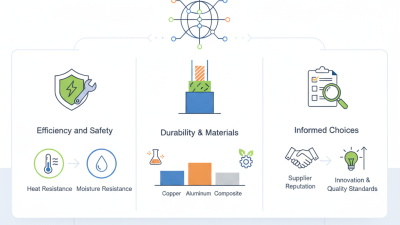
When you're in the market for an Aerial Cable for a big global project, it’s tempting to just focus on price per meter. But honestly, there’s more to it than that. The routes you’ll be working with might cross farmland, coastal areas, mountain passes, or busy city streets—all of which really change what kind of cable you need, especially from a mechanical and environmental perspective.
Philippe Vanhille, who’s a telecom infrastructure expert with Prysmian Group, puts it pretty simply but wisely: “The right cable is the one built for the actual conditions of your network, not some ideal scenario.” That’s a point worth paying attention to. When choosing your cable, you’ll want to consider things like span length, wind loads, ice buildup, temperature swings, how much the Cable Can sag, and what kind of installation tools you’ll have at your disposal. Sure, fiber count matters, but it’s just one piece of the puzzle. A cable that's more compact might cut down on weight, but its outer sheath could be vulnerable to harsh UV rays. And a more robust design may be super reliable, but it could also mean bigger fittings and higher installation costs.
All these details tend to become clearer once you're out in the field. For example, a Cable Spanning 120 meters in a rural area will need a different support setup than one mounted on urban poles crammed together. Pay attention to messenger strength, the hardware at dead ends, bend radius, grounding methods, and whether it’s compatible with your existing infrastructure. Before you sign any purchase orders, it’s also smart to check factory test reports, traceability, warranty details, and support for replacements.
And don’t forget—specs can be tricky. They might look good on paper but could be misleading once you get into real-world conditions.
When it comes to buying from around the world, clear communication is key. Make sure your technical specs are spelled out clearly, check regional standards, and if you can, ask for samples. One small overlooked detail can end up holding up the whole project. Even experienced buyers sometimes get tunnel vision and focus too much on upfront costs—that’s a mistake. A good, reliable Aerial Cable will do more than just fit your budget; it should safeguard your network performance, keep installation safe, and help with maintenance down the line.
Understanding Aerial Cable Types and Their Global Applications
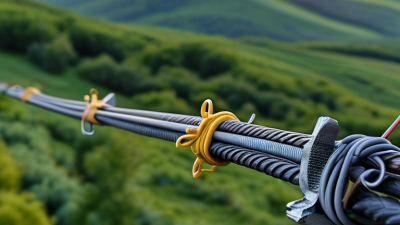
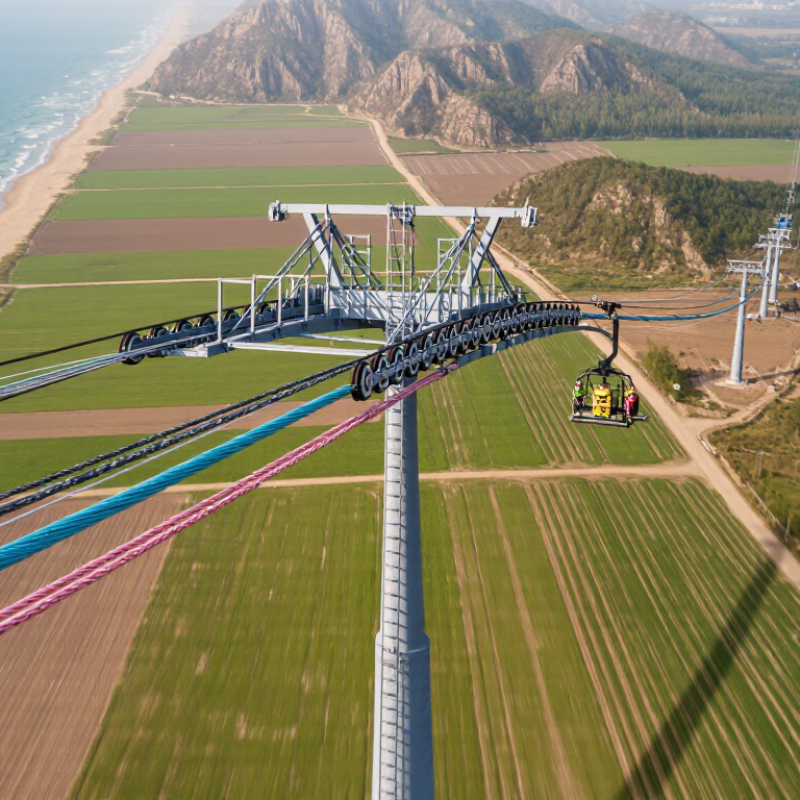
Aerial Cables serve different networks, so their construction matters more than appearance. All-dielectric self-supporting cables suit fiber routes near Power Lines because they contain no metallic messenger.Figure-eight cables combine a fiber core with a supporting wire, making installation practical on utility poles. Messenger-supported cables often carry heavier loads across longer spans. Optical ground wirecan protect Transmission Lines while providing a communications path.Not every cable fits every climate.
Global applications demand careful environmental judgment. In tropical regions, intense sunlight, rain, and biological growth can weaken poorly protected jackets. Coastal routes need resistance to salt-laden air. Cold regions require designs that tolerate ice loading and sharp temperature changes. Wind pressure also affects sag, pole stress, and hardware selection. A cable that performs well in a dry city may fail on an exposed mountain route. Small errors become costly.
Experienced buyers should request span ratings, tensile data, minimum bend radius, operating temperature, and verified attenuation results. Installation teams should confirm compatible clamps, dead ends, grounding parts, and pole spacing before ordering. Local electrical and telecommunications requirements must be checked, even when the cable appears technically suitable. I have found that sample inspection often reveals uneven jackets or unclear markings before shipment. Specifications can look complete. They are not always complete. Leave room for review, because field conditions rarely match the original drawing perfectly.
Matching Cable Structure to Load, Span, and Installation Conditions
For global buyers, Aerial Cable selection starts with the route, not the catalog. Measure the working span, attachment height, wind exposure, and expected service load. A short urban span may tolerate a compact structure. A 180-meter crossing needs stronger tensile support and controlled sag. Do not size from conductor weight alone. Ice, wind, fittings, and installation tension can change the result. Field teams often discover this too late. That mistake is expensive.
Match Cable Structure to the installation method. Self-supporting designs suit routes where messenger hardware is impractical. Messenger-supported cables can simplify replacement and improve mechanical control on longer runs. Separately supported structures may protect sensitive fibers from excessive pulling force. Check allowable tension, minimum bend radius, crush resistance, and temperature range in the technical documentation. During installation, use calibrated tension equipment and monitor sag at several points. One reading is not enough. It sounds minor, but uneven terrain can hide a dangerous low section.
Environmental details deserve equal attention. Coastal air, industrial dust, tree movement, and repeated freezing can shorten service life. Select jackets and strength members for actual exposure, not the average forecast. Verify pole spacing, attachment clearance, hardware compatibility, and access for future maintenance. Independent test reports and traceable quality records provide stronger evidence than sales language. I would allow a modest safety margin while avoiding needless oversizing. More strength is not always better; heavier Cable Can increase pole loading and installation risk. Recheck the design after a site walk. Plans often miss one stubborn branch.
Checking Electrical Performance, Capacity, and Safety Requirements
When buying aerial cable, electrical performance should be checked before price or delivery speed. Request conductor resistance, insulation resistance, voltage rating, and short-circuit withstand data. Do not rely on a product photograph. A 4m sample, sometimes listed as Aerial Cable 4m, can reveal flaws in stripping and connector fit. Measure the conductor with calibrated equipment, then compare the results with the supplier’s test report. Small differences matter. Humidity, heat, and sunlight can change performance after installation.
Capacity requires more than reading the advertised current. Calculate the expected load, installation length, cable grouping, ambient temperature, and allowable voltage drop. For bundled cables, heat cannot escape easily. That reduces practical ampacity. Field inspections often show cables passing bench tests but struggling on crowded poles. Ask for continuous and emergency ratings, conductor material, cross-sectional area, and sag data. A cable rated for 100 amperes in cool air may need derating in tropical conditions. Have the calculations reviewed by a qualified electrical engineer.
Safety requirements should match destination-country rules and utility specifications. Verify insulation flame behavior, mechanical strength, UV resistance, water penetration, and marking durability. Confirm factory routine tests, batch traceability, and independent certification where required. Keep installation clearances and earthing arrangements in the design. Ask for clear installation instructions. This is often overlooked. One honest limitation remains: laboratory results cannot predict every site condition. Inspect samples, records, and finished installations before approving volume orders.
Comparing Materials, Weather Resistance, and Expected Service Life
10 Aerial Cable Buying Tips for Global Buyers
Material selection controls both performance and expected service life. Aluminum conductors reduce weight and simplify installation, while steel reinforcement improves mechanical strength. Insulation also matters. XLPE usually tolerates heat better than basic polyethylene, but the actual grade and thickness require careful review. Ask for verified electrical, tensile, and aging-test data.
Weather resistance is never just a marketing phrase. Check ultraviolet protection for exposed jackets, especially in regions with intense sunlight. Moisture-sealing layers help prevent water migration along the cable. Coastal buyers should examine salt-fog resistance, while cold-climate projects need low-temperature flexibility. Wind, ice, and repeated thermal expansion can stress Aerial And Cable systems over many seasons.
Service-life estimates depend on loading, sag, installation quality, and maintenance. A cable rated for decades may fail early when pulled beyond its limits or installed with unsuitable fittings. Inspect the outer jacket for cracking, chalking, and abrasion. Check connections for corrosion after severe weather. Small defects become expensive quickly. Perfect forecasts are impossible. Buyers should compare test conditions with real site conditions, not rely on one impressive number. I would also leave a safety margin, although budgets often push decisions too tightly.
Verifying International Standards, Certifications, and Testing Documents
For global buyers, an aerial cable certificate is only useful when it matches the actual product. IEA’s Electricity Grids and Secure Energy Transitions report estimates that annual grid investment must exceed 600 billion dollars by 2030. That pressure increases the risk of rushed procurement. Check the applicable IEC standard, voltage class, conductor material, insulation, and installation environment. IEC 60502-1 may apply to certain low-voltage cables, while higher-voltage designs require different specifications. Never accept a generic “IEC compliant” statement.
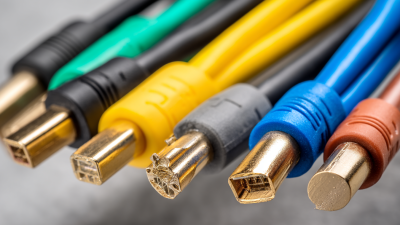
Ask for complete testing evidence. A reliable report should show the cable length, production batch, test date, measured values, equipment identification, and laboratory accreditation. ISO/IEC 17025 accreditation supports confidence in laboratory competence, but it does not prove every cable is suitable for your project. Request routine test records, type-test reports, dimensional results, conductor resistance, insulation resistance, and voltage withstand data. For Aerial Cable Ends, inspect sealing, crimping, and mechanical pull-test records. Small defects can admit moisture later.
I have seen buyers focus on certificates while overlooking document consistency. The certificate showed one conductor size; the packing list showed another. That mistake is avoidable. Compare the certificate, datasheet, marking, invoice, and test report line by line. Independent verification is valuable when the supplier is unfamiliar or the shipment is large. Still, inspection sampling has limits. A clean report cannot replace field engineering, correct installation, or climate-specific assessment.
Evaluating Suppliers, Customization Options, Pricing, and Total Cost
For global buyers, an aerial cable supplier deserves more than a low quotation. Check factory ownership, export experience, production capacity, and independent test records. Request samples with conductor size, insulation thickness, tensile strength, and operating temperature clearly documented. The IEA’s Electricity Grids and Secure Energy Transitions report (2023) estimates that annual grid investment must exceed 600 billion dollars by 2030. Demand is expanding. Supplier reliability matters more.
Customization should match the installation, not merely the catalogue. Confirm voltage class, span length, wind loading, UV resistance, fire performance, and messenger-wire requirements. An Aerial Cable Cover may protect exposed sections from abrasion, sunlight, or animal contact, but its material must suit local temperatures. Ask for drawings, tolerance limits, and a pilot batch. Small mistakes become expensive. I would also verify third-party laboratory results, warranty terms, traceability codes, and replacement availability.
Compare landed cost, not unit price. Include tooling, certification, packaging, freight, duties, installation hardware, inspection, maintenance, and rejected materials. The World Bank’s Commodity Markets Outlook has repeatedly highlighted volatility in industrial metal prices, making quotation validity and adjustment clauses important. A five-percent cheaper cable can lose its advantage through shorter service life or difficult repairs. Use a five-year and fifteen-year cost model. Review payment terms, delivery buffers, and after-sales response times. One overlooked detail is local technical support; remote advice may not solve a damaged cable during heavy rain.
Planning Shipping, Regulatory Compliance, Installation, and After-Sales Support
10 Aerial Cable Buying Tips for Global Buyers
Planning shipping, compliance, installation, and after-sales support requires more than comparing cable prices. The International Energy Agency reports that about 80 million kilometers of power grids may need upgrading or replacement by 2040. This signals stronger demand for reliable overhead infrastructure. Before ordering, confirm conductor size, fiber count, insulation, tension limits, UV resistance, and expected service temperature. Request test reports linked to IEC 60794, IEC 60840, or applicable ITU-T specifications. Standards must match the cable type.
Shipping details can quietly create major delays. UNCTAD reports that over 80% of global merchandise trade by volume moves by sea. Protect reels against salt air, rain, impact, and unstable loading. Confirm reel dimensions, gross weight, lifting points, customs codes, and destination-port handling rules. Ask for moisture indicators and shock records. Small omissions become expensive.
Installation planning should include sag tables, span lengths, wind pressure, ice loading, grounding, and local clearance rules. Local engineers should verify permits before delivery. A cable that passes factory testing may still fail through poor pulling tension or sharp bends. After-sales support should provide installation drawings, emergency contacts, replacement procedures, and traceable batch records. Keep spare lengths. That is not always convenient. It is often sensible. Buyers should also review response times and warranty exclusions in writing. Industry reports provide useful direction, but site conditions remain the harder question.
A Guide to China Suppliers of 0.6/1kV Aerial Bundled Conductors Meeting NF C 33-209 Standards
China suppliers of 0.6/1kV aerial bundled conductors meeting NF C 33-209 standards provide practical solutions for overhead power distribution in residential, commercial, rural, and infrastructure projects. Designed for dependable operation, these cables combine strong mechanical performance with reliable electrical transmission. Their compact bundled structure helps simplify installation, reduce the space required on overhead networks, and improve protection against environmental exposure.
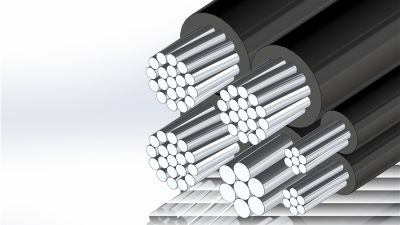
The phase conductor is manufactured from circular stranded, compact aluminum, offering efficient conductivity, reduced weight, and excellent mechanical strength. The neutral or messenger conductor is made from stranded or compacted aluminum alloy (AAAC), enabling it to withstand tension, wind, and other mechanical stresses while maintaining stable electrical performance. An optional street lighting conductor can also be included, supporting lighting requirements in urban streets, villages, public areas, and other outdoor applications.
Each conductor is insulated with black crosslinked polyethylene (XLPE), providing strong electrical insulation and resistance to moisture, sunlight, temperature variation, and other environmental conditions. Manufactured in China under controlled production procedures, these aerial bundled conductors are available for projects requiring 0.6/1kV voltage ratings and compliance with NF C 33-209. Careful material selection, consistent construction, and quality inspections help ensure dependable performance during transport, installation, and long-term service.
FAQS
Confirm the voltage class, conductor material, insulation, cable type, and installation environment. A generic compliance statement is not enough. The certificate must match the actual product.
Request routine tests, type tests, dimensional results, conductor resistance, insulation resistance, and voltage withstand data. Each report should show the cable length, batch, test date, measured values, and equipment identification. Missing details deserve questions.
Compare the certificate, datasheet, cable marking, invoice, packing list, and test report. Check conductor size carefully. One document may show 120 square millimeters, while another shows 150. That mismatch can delay installation.
No. Accreditation supports laboratory competence, but it does not confirm project suitability. Field conditions still matter. Review climate, voltage, span length, loading, and installation methods separately.
Check sealing, crimping, and mechanical pull-test records for cable ends. Look for firm seals and clean crimp areas. Small gaps can admit moisture later. This detail is easy to miss.
Confirm reel dimensions, gross weight, lifting points, customs codes, and destination-port handling rules. Protect reels from salt air, rain, impact, and unstable loading. Ask for moisture indicators and shock records. Small omissions become expensive.
Prepare sag tables, span lengths, wind pressure, ice loading, grounding, and local clearance requirements. Local engineers should verify permits before delivery. Poor pulling tension or sharp bends can damage a tested cable. Factory approval cannot fix bad installation.
Request installation drawings, emergency contacts, replacement procedures, and traceable batch records. Confirm response times and warranty exclusions in writing. Keep spare cable lengths nearby. It is inconvenient, but often sensible. Site conditions remain the harder question.
Conclusion
Choosing the right Aerial Cable for an international project requires more than comparing prices. Buyers should first identify the cable type best suited to the application, then match its structure and strength to the expected load, span length, installation method, and environmental conditions. Electrical capacity, insulation quality, temperature limits, safety performance, and compatibility with local power systems are also essential considerations. Materials should be evaluated for resistance to moisture, ultraviolet exposure, wind, corrosion, and temperature changes, while the expected service life should align with long-term project goals.
Before placing an order, confirm that the supplier can provide relevant international standards, certifications, inspection records, and test reports. It is also important to review customization capabilities, production consistency, lead times, and total cost rather than focusing only on the purchase price. Finally, plan transportation, import requirements, installation guidance, technical support, warranty terms, and after-sales service in advance. A careful evaluation of these factors can reduce project risks and help ensure reliable, efficient, and durable cable performance in different markets.



 +86 13777722188
 WHATSAPP
 PHONE
 E-MAIL