+86 13777722188 


So, picking the top Concentric Aluminum Cable manufacturers for 2026? Well, it takes a lot more than just comparing catalog prices. If you're a utility buyer, you'll want real proof—evidence from actual installations, test records, and how the cable holds up over years of service. This intro looks at manufacturers through the lens of conductor quality, insulation consistency, neutral design, corrosion resistance, and documented production controls. It also weighs delivery capability, technical support, and how transparent they are about certifications.
Electrical engineer and cable specialist Dr. Alex McEachern puts it plainly: 'Reliability isn't promised by the cable; it's demonstrated by the connection.' That's especially true in overhead distribution projects, where one badly prepared joint can drag down an otherwise great Concentric Aluminum Cable. Field crews notice the little things—strand damage, uneven stripping, loose fittings, and water sneaking into weak spots.
The manufacturers I'm considering here include Prysmian, Nexans, Southwire, Encore Wire, LS Cable & System, and other established suppliers with relevant product experience. But a big name isn't automatically the right fit for every network. Climate, span length, loading, installation tools, and local standards can all shift the outcome. No ranking is perfect. Factory data can look impressive, yet field performance sometimes exposes uncomfortable gaps. Before ordering, buyers should double-check current certificates, conductor dimensions, warranty terms, and independent test reports. And a careful comparison should stay open to revision—especially as aluminum alloys, insulation systems, and smart-grid requirements keep evolving. Think of this guide as a practical starting point, not the final word.
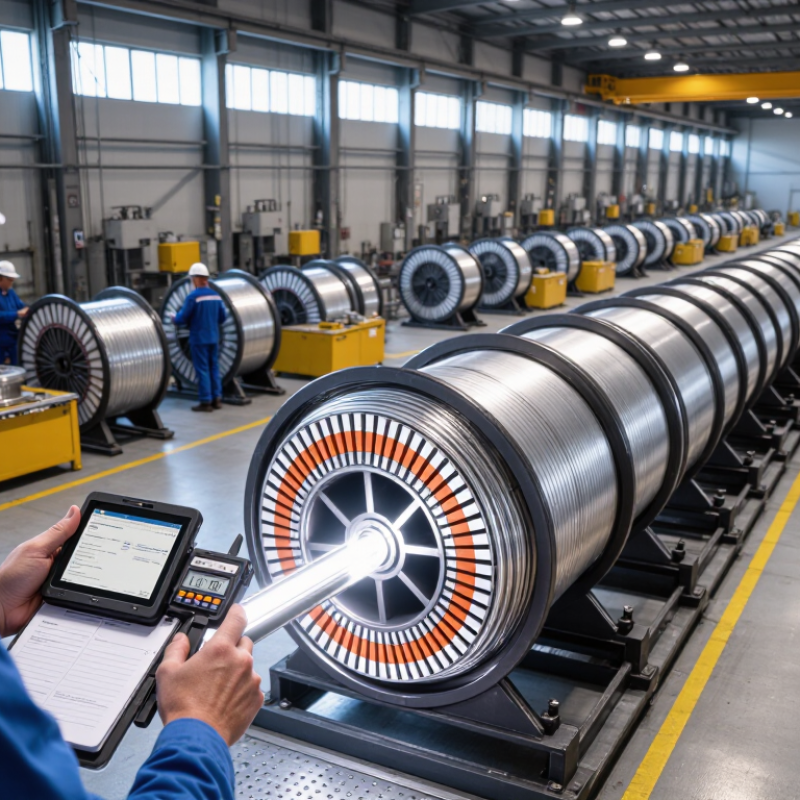
Concentric Aluminum Cable combines a central aluminum phase conductor with aluminum neutral strands arranged around its insulated core. The neutral wires form a visible, even ring. Some designs include an outer jacket for moisture and mechanical protection. Cable size, insulation, and neutral construction vary by application.
Electricians commonly use this cable for residential service entrances, underground feeders, and overhead secondary distribution. It can carry power from a transformer to a building’s main service equipment. The concentric neutral may also provide a return path and grounding function, depending on the system design.
In a typical installation, crews check the cable diameter before pulling it through conduit. Tight bends can damage insulation or distort the neutral strands.
Aluminum reduces weight and material cost compared with copper. That advantage matters on long runs and overhead systems. However, installation quality remains critical. Technicians must prepare contact surfaces, use approved connectors, and apply the specified torque. Thermal expansion can loosen poor connections over time. Corrosion is another concern in wet or contaminated locations.
I have found that Cable Selection often looks simple on a drawing, yet field conditions change the decision. Voltage drop, available fault current, burial depth, and local utility requirements all deserve review.Concentric Cable is not automatically the best choice. Engineers should verify ampacity and grounding details against current electrical standards before installation.
When evaluating 2026 Concentric Cable manufacturers, quality standards should outweigh production volume. The IEA’s Electricity 2024 report projects global electricity demand to grow by about 4% annually through 2026. That pressure can expose weak conductor control, poor insulation, and rushed testing.
A reliable manufacturer should demonstrate compliance with IEC 60228 for conductor resistance and dimensional consistency. ASTM B231 also defines requirements for aluminum concentric-lay-stranded conductors. These details matter on the factory floor. Each aluminum strand should show uniform diameter, clean surfaces, and stable lay length. The finished cable needs controlled insulation thickness, firm concentricity, and clear batch identification. Small defects can create larger installation problems.
Testing records deserve close inspection. Look for tensile results, elongation data, conductor resistance at 20°C, and insulation spark-test records. IEC 60502-1 provides relevant requirements for power cable construction and testing. The IEA data indicates stronger grid investment, but higher demand does not guarantee better manufacturing. A polished certificate is not enough. I would still request recent third-party test reports, factory audit evidence, and traceable sample numbers. Some suppliers may present excellent samples while production consistency remains uncertain. That gap needs attention. Procurement teams should also inspect drum protection, moisture barriers, marking accuracy, and storage conditions before shipment. A cable can pass laboratory testing and still suffer from careless handling.
| Quality Dimension | Relevant Standard or Reference | Key Requirement or Benchmark | Recommended Verification Method | Importance in Manufacturing |
|---|---|---|---|---|
| Conductor material | ASTM B230/B231 or IEC 60228 | Use electrical-conductor-grade aluminum, commonly aluminum 1350 for general-purpose conductors or aluminum alloy 6201 for higher mechanical strength. | Review material certificates and perform chemical composition, conductivity, and tensile testing. | Determines conductivity, tensile performance, corrosion behavior, and service reliability. |
| Electrical resistance | IEC 60228 or the applicable national conductor specification | DC resistance at 20 °C must not exceed the maximum value specified for the declared conductor cross-sectional area and construction class. | Measure conductor resistance using a calibrated low-resistance bridge and correct the result to 20 °C. | Controls power loss, voltage drop, operating temperature, and energy efficiency. |
| Stranding and concentric construction | ASTM B231, ASTM B232, IEC 61089, or project specification | Strands must be uniformly arranged around the core, with controlled lay direction, lay length, compactness, and finished outside diameter. | Use dimensional inspection, visual examination, strand-count verification, and lay-length measurement. | Ensures stable geometry, consistent current distribution, flexibility, and compatibility with accessories. |
| Cross-sectional area and diameter | ASTM B231/B232 or IEC 60228 | The nominal area, number of strands, individual wire diameter, and finished cable diameter must match the approved design. | Check with calibrated micrometers, optical measurement, weighing, and cross-sectional calculation. | Prevents installation problems and supports accurate ampacity and resistance calculations. |
| Tensile strength and elongation | ASTM B230, ASTM B398, ASTM B231, or IEC 61089 | Mechanical properties must meet the limits for the selected aluminum grade and temper, such as annealed aluminum or hard-drawn alloy wire. | Test representative wires and completed conductors with calibrated tensile-testing equipment. | Provides resistance to installation tension, vibration, sag, and thermal-mechanical stress. |
| Surface condition | Applicable ASTM or IEC conductor standard | The aluminum surface should be clean, smooth, and free from cracks, sharp grooves, excessive oxidation, inclusions, and damaging scratches. | Perform 100% visual inspection supported by magnification and periodic microscopic examination. | Reduces the risk of electrical hot spots, premature corrosion, strand breakage, and poor termination. |
| Insulation system, where applicable | IEC 60502-1 or the specified national low-voltage cable standard | Insulation material, nominal thickness, voltage rating, and electrical performance must correspond to the declared cable design. | Measure insulation thickness and perform spark, insulation-resistance, and voltage tests as required. | Protects against leakage current, short circuits, moisture ingress, and insulation breakdown. |
| Water-blocking and moisture resistance | Project specification or applicable cable construction standard | When specified for underground or wet locations, longitudinal water penetration must remain within the approved test limit. | Conduct a longitudinal water-penetration test using the specified test duration, water head, and acceptance criteria. | Limits moisture migration and helps maintain insulation performance over the service life. |
| Thermal performance | IEC 60287 for current-rating calculations; applicable cable standard for temperature limits | Ampacity must be calculated from conductor resistance, installation conditions, ambient temperature, thermal environment, and permitted conductor temperature. | Verify design calculations and, where required, perform temperature-rise or load-cycle testing. | Prevents overheating and supports safe continuous and emergency loading. |
| Routine electrical tests | IEC 60502-1 or the applicable product standard | Each finished cable length should pass the specified conductor continuity, resistance, insulation, and high-voltage tests. | Maintain calibrated test records for every production lot and cable length. | Detects manufacturing defects before shipment and supports batch traceability. |
| Dimensional and weight consistency | Approved product drawing and purchase specification | Finished diameter, cable mass, conductor length, layer arrangement, and packaging length should remain within documented production tolerances. | Use in-line diameter monitoring, weighing, length counters, and final inspection reports. | Improves installation efficiency, material control, and consistency between production lots. |
| Corrosion protection | Applicable environmental specification and material standard | The selected aluminum grade, surface treatment, separators, and jacket materials must be suitable for the declared marine, industrial, coastal, or underground environment. | Review material compatibility and perform environmental or corrosion testing when required by the application. | Reduces oxidation, galvanic interaction, and long-term loss of mechanical or electrical performance. |
| Manufacturing quality system | ISO 9001:2015 | Production should be controlled through documented procedures, calibration, nonconformance handling, corrective action, and lot traceability. | Audit quality records, calibration certificates, process-control plans, and certificate-of-conformity documentation. | Provides repeatable manufacturing controls and evidence that quality requirements are consistently managed. |
Note: Acceptance limits depend on the selected conductor class, cable voltage rating, construction, installation environment, and purchase specification. The standards listed above should be confirmed against the latest edition and the applicable national requirements before procurement.
2026 Top Concentric Aluminum Cable Manufacturers?
How to Evaluate Concentric Aluminum Cable Manufacturers in 2026
The “top” manufacturer is not always the most visible one. I would begin with test evidence, factory controls, and project experience. The IEA’s Electricity 2024 report expects global electricity demand to grow by an average 3.4% annually from 2024 to 2026. That growth increases pressure on cable suppliers, but speed should not replace verification. Ask for conductor resistance, tensile strength, insulation thickness, and short-circuit test results under applicable IEC requirements.
Concentric cable quality depends on details that drawings may hide. Check aluminum grade, strand compaction, neutral conductor layout, screen continuity, and moisture protection. A sample should be measured before approval, not merely photographed. The International Aluminium Institute recorded 72.7 million tonnes of primary aluminum production in 2024, yet availability does not prove consistent cable quality. Require heat-number traceability, incoming-material records, and independent type-test certificates. Factory audits should also review calibration dates and rejected-batch handling.
Commercial reliability deserves equal attention. Compare verified production capacity, realistic lead times, packaging for outdoor storage, and technical response time. Request references for similar voltage levels and installation environments. A spreadsheet can mislead. A factory may pass one test and still struggle with repeatability. I would include witness testing, sample retention, and clear warranty terms in the purchase contract. Recycled aluminum claims also need evidence, preferably chain-of-custody records and measured conductivity. Some evaluations remain imperfect; field conditions, installation workmanship, and connector compatibility can change performance significantly. That uncertainty should be documented, not hidden.
Choosing a concentric Aluminum Cable manufacturer requires more than comparing prices. Experienced buyers should inspect conductor quality, insulation consistency, and production traceability. Ask for test records covering resistance, tensile strength, insulation thickness, and voltage performance. Reliable manufacturers can explain their processes without hiding behind technical language. Factory capacity also matters when projects require steady delivery across several months.
A practical evaluation should include a sample inspection. Look at the cable surface, conductor alignment, and labeling on each coil. Request evidence of quality systems, material sourcing, and independent testing. Local installation experience can reveal problems that brochures rarely mention. Still, no supplier is perfect. Delivery delays, inconsistent documentation, or small dimensional variations may appear after approval. I would recheck those details before signing a long-term contract.
Tips: Compare at least three qualified manufacturers. Confirm aluminum grade and cable dimensions in writing. Ask how rejected coils are handled. Check whether support staff understand installation conditions. Keep one sealed sample for future comparison. A low quote may reflect weaker controls, but a high quote does not guarantee better performance. That point deserves careful reflection.
Details matter. A capable supplier should explain conductor stranding, insulation thickness, screen construction, and temperature ratings clearly. Customization is more than changing cable length. It can involve conductor diameter, shielding layers, jacket color, packing format, and drum dimensions. Experienced engineering teams review voltage, installation temperature, bending radius, and expected load before proposing a design. That process reduces costly field adjustments.
Technical capability should be supported by measurable evidence. Look for resistance testing, dimensional checks, tensile testing, aging evaluation, and routine electrical verification. Traceable batch records improve confidence during procurement and installation. Factory engineers should also provide drawings, technical data sheets, sample approval, and practical installation guidance. However, specifications alone do not guarantee dependable performance. A supplier may show excellent laboratory results but still struggle with delivery consistency or communication. This is where production experience becomes visible. Ask how defects are handled, how changes are documented, and whether inspection reports match shipped products. Some projects need tighter tolerances than standard catalogs suggest. Manufacturers that welcome these discussions usually demonstrate stronger technical maturity.
Selecting a 2026 concentric aluminum cable manufacturer requires more than comparing unit prices. The London Metal Exchange aluminum price often drives the base cost, while conductor size, PVC compound, shielding, and freight add separate premiums. USGS Mineral Commodity Summaries 2025 reported global primary aluminum production near 72 million metric tons in 2024. That scale supports supply, but regional energy costs still affect quotations. Ask for a transparent formula, not a vague “best price.”
Certification evidence should match the cable design and destination market. Useful references include IEC 60502-1, ASTM B8, and applicable ICEA requirements. ISO 9001 supports process control, but it does not replace product testing. Request conductor resistance results, insulation thickness records, tensile data, and routine-test reports. For Pvc Aluminum Cable, verify the PVC temperature rating and flame-performance declaration. Small details matter.
Lead times commonly depend on billet allocation, extrusion capacity, and port schedules. A practical supplier should state production days, inspection timing, packaging dimensions, and shipping terms. The World Bank Commodity Markets Outlook tracks aluminum price volatility, so quotations should show validity dates and adjustment rules. Global supply support also means local documentation, origin certificates, and responsive technical contact. Some buyers overlook this. I would also challenge unusually short lead times; they may reflect stock age, not manufacturing strength. Supplier audits and witnessed tests remain worthwhile, even when the paperwork looks complete.
The expansion of renewable generation is increasing the need for dependable overhead transmission. The International Energy Agency estimates that more than 80 million kilometers of power grids will need to be added or modernized worldwide by 2040, while annual grid investment must rise to approximately USD 600 billion by 2030. Data tracked by Global Energy Monitor also shows a rapidly growing pipeline of utility-scale solar and wind projects, placing greater pressure on transmission networks to deliver power efficiently across long distances and challenging environments.
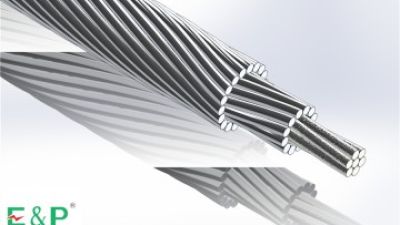
Designed to meet BS EN 50182, formerly BS 215-1, ACSR combines a galvanized steel core with high-quality AL1 aluminum strands. The steel core supplies mechanical strength and stable sag performance, while the aluminum outer layer provides efficient electrical conductivity with a favorable strength-to-weight ratio. This bare conductor is suitable for high-voltage lines, renewable-energy evacuation systems, and network upgrades where durability and dependable operation are essential. Manufactured under controlled quality procedures, the conductor is engineered to withstand wind, temperature variation, and other demanding outdoor conditions, making it a practical choice for transmission suppliers and infrastructure projects.
Inspect conductor quality, insulation consistency, surface finish, and production traceability. Request resistance, tensile, insulation thickness, and voltage test records.
A sample reveals conductor alignment, cable surface quality, coil labeling, and dimensional consistency. Keep one sealed sample for later comparison. Small differences matter.
Request material sourcing records, quality-system evidence, independent test results, origin documents, and routine-test reports. ISO certification supports process control, but it does not replace product testing.
Ask for a transparent pricing formula. Aluminum costs, conductor size, insulation material, shielding, packaging, and freight affect the final quotation.
Confirm aluminum grade, cable dimensions, production days, inspection timing, packaging size, shipping terms, quotation validity, and adjustment rules.
Ask about billet allocation, extrusion capacity, factory workload, and port schedules. Extremely short lead times deserve careful questioning. They may reflect old stock.
Verify the PVC temperature rating, insulation thickness, flame-performance declaration, and intended installation conditions. Do not rely only on a catalog description.
Yes. Compare at least three qualified manufacturers using the same technical requirements. A low price may signal weak controls, but a high price proves nothing.
Delivery delays, incomplete documents, rejected coils, and small dimensional variations may still occur. I would recheck these details before signing a long-term contract.
This guide explains what Concentric Aluminum Cable is, how its central conductor and surrounding aluminum layers are structured, and where it is commonly used in overhead distribution, service connections, and utility infrastructure. It also outlines the key quality standards manufacturers should follow, including conductor consistency, insulation performance, dimensional accuracy, mechanical strength, electrical reliability, and documented testing procedures.
The article provides a practical framework for evaluating Concentric Aluminum Cable manufacturers in 2026. It focuses on production capacity, product range, customization options, engineering support, quality control, certifications, pricing transparency, lead times, packaging, and global supply capabilities. Readers will learn how to compare suppliers based on technical competence, project responsiveness, material traceability, and long-term service support. The goal is to help buyers select a dependable manufacturer that can meet specific voltage, conductor, insulation, installation, and delivery requirements while maintaining consistent product quality.