+86 13777722188 


Picking the right Aerial Cablein 2026 isn’t just about checking the price per kilometer. Honestly, you’ve got to think more about how the cable design fits the specific terrain, voltage requirements, wind conditions, access for installation, and the overall network capacity. For example, running a cable through a mountainous area might mean going for All-Dielectric Self-Supporting (ADSS) cable, while a path for transmission might call for Optical Ground Wire (OPGW). And if you’re dealing with existing poles, a Figure-8 Aerial Cable could really make deployment smoother. Basically, each type of cable is built to solve a different kind of problem out in the field.
Remember Dr. Charles K. Kao? The guy who basically kicked off fiber-optic communications. He famously said, “The potential of optical fiber is unlimited,” and his ideas still influence how we build aerial networks today. But here's the thing—fiber’s performance isn’t just about the fiber itself. The way the cable is constructed really matters. You want to pay attention to things like tensile strength, how many fibers are inside, what the sheath is made of, how long the spans are, how the Cable Sags, and its resistance to UV rays. When choosing products from brands like Prysmian, CommScope, Corning, or ZTT, it’s smart to compare them based on what your specific project needs, not just brand reputation.
And hey, little details actually make a big difference. A cable crossing open farmland might face totally different stresses compared to one running alongside a salty coastal road. Exposure to salt, ice, vibrations, rodents, and temperature swings can seriously shorten the cable’s lifespan. So it’s worth looking closely at IEC 60794 test results, factory quality checks, installation instructions, and warranty details. That said, no supplier can completely eliminate all site risks. Sometimes, a product might look perfect on paper but can be tough to verify once it's actually out in the field. This guide is here to walk you through the main types of Aerial Cables for 2026, showing what works well in real-world conditions, and what limitations you should be aware of. Remember, the most advanced cable isn’t always the best choice. The real test is finding one that stays reliable—through storms, maintenance, and years of exposure, despite whatever the environment throws at it.
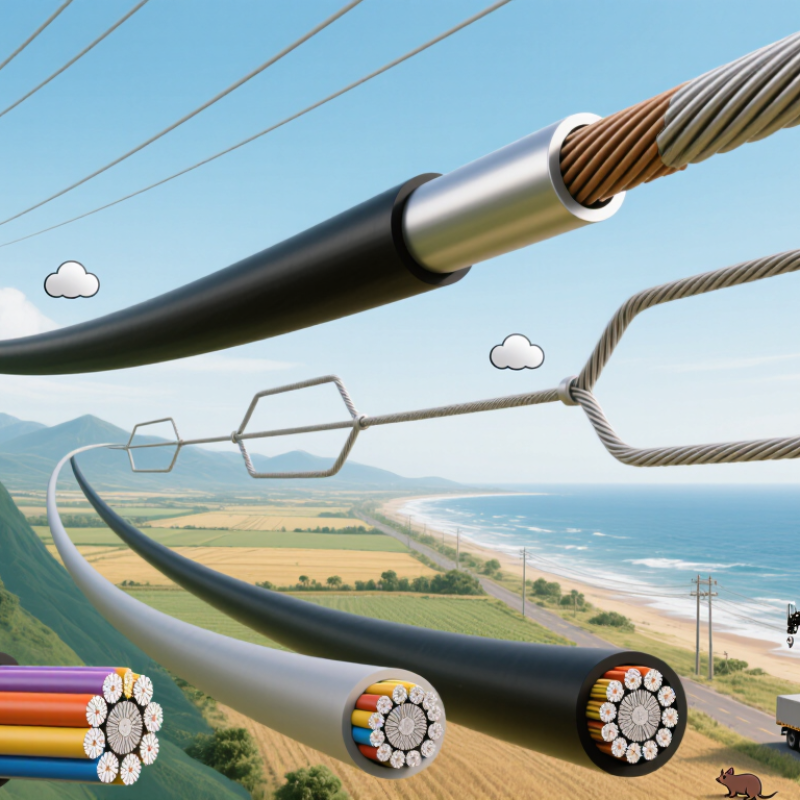
Aerial Cables carry power or data above roads, farms, and industrial sites. For telecom networks, common designs includeADSS, figure-eight, and lashed cables. Their first classification is support method. ADSS relies on its own strength member. Figure-eight cable uses a messenger wire. Lashed cable attaches to an existing support strand.
Classification also depends on electrical exposure, fiber count, span length, and weather loading. IEC 60794-4 provides guidance for overhead optical fiber cables, while IEC 60826 helps engineers assess wind and ice loads on overhead lines. These details matter in coastal zones. Salt, sunlight, and repeated temperature changes can shorten service life. A 120-meter rural span needs different mechanical planning than a 35-meter roadside span.
Global demand is becoming more fiber-focused. The OECD Broadband Statistics report for 2024 showed fiber connections reached about 43% of fixed broadband subscriptions across OECD economies in late 2023. That figure supports stronger aerial infrastructure, but it does not justify choosing one cable type everywhere. Local poles, clearance rules, and maintenance access remain decisive. I have seen specifications look perfect on paper, then fail during installation because sag allowances were too optimistic. Small mistake.
Tips: Ask for verified tensile, crush, bending, and temperature data. Check the cable’s rated span against real wind and ice conditions. Do not compare fiber count alone. A lighter cable may reduce loading, but it can require stricter installation control. Recheck the route after seasonal weather.
Global buyers in 2026 need aerial cables matched to climate, voltage, span length, and installation conditions. The common choices include ADSS fiber cable, OPGW, figure-eight cable, and Aerial Bundled Cable. Each design solves a different network problem.
ADSS cable suits power corridors because it uses no metallic messenger. OPGW combines grounding protection with fiber communication. Figure-eight cable offers stable support for shorter telecommunications spans. Aerial Bundled Cable helps improve safety in low-voltage distribution systems. For a short service connection, anAerial Cable 4m section may simplify handling, but its load rating still requires verification.
Field checks matter more than a sales sheet. Engineers should review wind pressure, ice loading, UV exposure, conductor sag, and minimum bending radius. Salt air near coastlines can damage unsuitable fittings. High-altitude routes may also need special tension calculations. Installation crews should confirm local electrical rules and tested performance documents.
I have seen projects fail because buyers compared only price and diameter. That shortcut creates trouble. A lighter cable may sag excessively after seasonal temperature changes. A stronger cable may increase pole stress and installation costs. No selection table is perfect. Real site data can expose assumptions that looked reasonable in the office. Suppliers should provide traceable test results, clear packing details, and practical installation guidance. Loose specifications remain a risk.
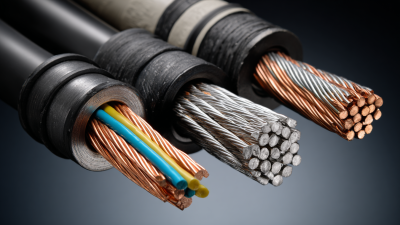
Global buyers compare more than price when selecting Aerial And Cableproducts. Aluminum Conductors reduce weight and suit long spans. Copper offers excellent conductivity but increases cost and loading. Fiber-reinforced designs can provide strong communication capacity without metallic conductors. Each material behaves differently under heat, wind, ice, and ultraviolet exposure. Field experience shows that local climate often matters more than catalog specifications.
Cable Structure also controls safety and service life. Bare conductors need wider clearances and reliable insulation coordination. Aerial bundled cable places insulated conductors together, helping reduce faults in crowded routes. All-dielectric self-supporting cable uses a reinforced jacket and needs no messenger wire. Check tensile strength, allowable sag, bending limits, and thermal ratings. Performance should align with recognized IEC, ASTM, EN, or equivalent national standards. Certification alone is not enough. Installation quality can still decide the outcome.
Tips: Ask for conductor resistance, UV-aging, salt-fog, flame, and mechanical test records. Confirm the standard edition and test laboratory. Inspect sample cross-sections before ordering. A small mismatch in jacket thickness may create larger maintenance costs later. Avoid choosing by weight alone. It sounds efficient, but the assumption can fail. Be honest about unknowns, especially future ice loading and route expansion.
2026 Top Aerial Cable Types for Global Buyers
Choosing aerial cables starts with the installation environment, not the lowest quotation. OECD Broadband Portal data from December 2023 showed fiber represented about 42% of fixed broadband subscriptions across member economies. Demand is rising, but pole conditions vary sharply. ADSS cables suit power corridors because they need no metallic messenger. Figure-eight cables fit compact urban routes. Messenger-supported designs can work well on older poles with controlled spans.
Check wind, ice, ultraviolet exposure, temperature, and clearance before selecting the cable. IEC 60794-3-20 covers outdoor optical cables, including aerial applications. Its framework supports practical checks for mechanical strength and environmental performance. In coastal zones, salt and strong gusts can accelerate sheath damage. In cold regions, ice loading may increase sag and reduce road clearance. A 120-meter span is not automatically safe; pole spacing, cable weight, and local weather data decide that.
Cable ends deserve equal attention. Poorly sealed Aerial Cable Ends can admit moisture, especially after repeated thermal cycling. Use closures rated for outdoor exposure, and leave a controlled service loop near each access point. Field inspections often find excessive tension near anchors. That mistake is avoidable. Still, a checklist cannot replace a site survey. Soil movement, crowded poles, and undocumented legacy lines may change the original design. A slightly conservative choice is often cheaper than a second installation.
Global buyers should compare insulated overhead conductors, aerial bundled cables, and covered conductors by project conditions, not price alone. Aerial bundled cables reduce contact exposure and suit dense urban networks. Covered conductors offer compact routing, but they still require controlled clearances. Insulated designs provide stronger protection in harsh environments, especially near trees or coastal air. Selection should match voltage, span length, wind loading, temperature, and installation hardware.
Compliance must be verified before shipment. Ask for test reports linked to the exact cable construction, conductor size, insulation material, and production batch. Relevant references may include IEC cable standards, national electrical codes, and utility-specific specifications. Accessories also matter. Connectors, clamps, and suspension fittings need compatible certification and mechanical testing. A certificate alone is not enough. Field inspections often reveal mismatched fittings, incomplete markings, or outdated documents. That is where risk quietly begins.
Tips: Request traceable factory records, UV and weathering results, conductor resistance data, and flame-performance evidence when required. Confirm whether the destination requires a conformity mark, third-party assessment, or local approval. Check packaging for voltage rating, batch number, length, and manufacturer details. Keep translation accuracy under review; a small wording error can change a compliance decision. I would also allow extra time for retesting. It feels inefficient, but export schedules rarely forgive missing evidence.
2026 Top Aerial Cable Types for Global Buyers?
For international buyers, cost begins with conductor material, insulation, fittings, and freight. Copper offers strong conductivity, but aluminum usually lowers cable weight and purchase cost. The International Energy Agency reported that annual global grid investment must exceed USD 600 billion by 2030. This pressure makes lightweight aerial bundled cable attractive for remote distribution projects. However, cheaper cable is not always cheaper after installation. Pole spacing, tension hardware, customs duties, and local testing can change the delivered price.
Supply reliability requires more than checking a supplier’s quotation. The IEA’s Global Critical Minerals Outlook 2024 highlighted continuing concentration risks in refined copper and aluminum supply chains. Buyers should request production capacity, tested lead times, and alternative routing plans. Aerial Cable Cover can reduce accidental contact risks near vegetation, but its specification must match voltage, weather, and pollution conditions. Some projects still underestimate port congestion. That mistake is expensive.
Maintenance planning should start before shipment. The World Bank’s Commodity Markets Outlook shows that metal prices can remain volatile, affecting replacement budgets and contract adjustments. Covered conductors may reduce outages caused by branches, yet they still need visual inspection, thermal checks, and hardware tightening. Salt, ultraviolet exposure, ice, and abrasion leave different damage patterns. Field crews should record sag, surface cracking, and connector temperature during scheduled visits. It is not perfect. A technically sound cable can still fail commercially when spare lengths, trained labor, or compatible accessories are unavailable.
| Cable type | Typical construction | Common applications | Indicative cost level | Supply-chain considerations | Maintenance considerations |
|---|---|---|---|---|---|
| AAC All-aluminum conductor | Stranded aluminum wires; no reinforcing core. | Shorter spans and distribution routes where high conductivity and lighter conductor weight are useful. | Usually low to medium for conductor material; final cost depends on aluminum prices, size, and accessories. | Aluminum is widely traded, but conductor availability depends on requested cross-section, stranding, and applicable standards. | Inspect for strand damage, corrosion, and clearance changes. Its lower mechanical strength can limit use on long spans or in high-tension conditions. |
| AAAC All-aluminum-alloy conductor | Stranded aluminum-alloy wires, generally without a steel core. | Distribution and transmission lines where a strength-to-weight balance and corrosion resistance are important. | Usually medium; alloy composition and conductor size affect the material cost. | Check alloy designation, mechanical and electrical requirements, and standards compatibility; specifications may differ between markets. | Routine visual and clearance inspections are still needed. Alloy construction can offer better corrosion resistance than many steel-core designs, but site conditions matter. |
| ACSR Aluminum conductor, steel-reinforced | Aluminum strands around a steel reinforcing core. | Transmission and distribution routes requiring higher tensile strength, including longer spans. | Usually medium; cost varies with aluminum and steel content, core design, and conductor size. | Confirm core and strand configuration, coating requirements, drum lengths, and delivery logistics. Large reels can affect transport and handling costs. | Inspect the conductor and fittings for strand damage, corrosion, vibration-related wear, and clearance changes. The steel core and connectors require suitable design for the environment. |
| Covered conductor Tree-wire type | Overhead conductor with a protective polymer covering; the covering is not equivalent to full cable insulation. | Overhead distribution in areas with vegetation, limited right-of-way, or increased exposure to incidental contact. | Usually higher than bare conductor systems because of the covering and compatible fittings. | Verify covering material, voltage class, UV and tracking performance, fittings, and local utility requirements. Availability can vary by specification. | Inspect the covering for cuts, abrasion, tracking, and aging. Maintain required clearances and vegetation controls; covering does not eliminate electrical hazards. |
| ABC Aerial bundled cable | Multiple insulated conductors bundled together, commonly used for low-voltage overhead distribution; configurations vary by system. | Low-voltage distribution, service connections, and congested routes where bundled construction is appropriate. | Often higher in cable material cost than bare low-voltage conductors, while installation and support costs depend on route design. | Specify conductor material, insulation, messenger or support arrangement, voltage rating, accessories, and local standards before comparing quotations. | Check insulation, support hardware, connectors, and attachment points. Bundling does not remove the need for safe working clearances or periodic inspection. |
| ACSS Aluminum conductor, steel-supported | Annealed aluminum strands supported by a steel core; designed for high-temperature operation in suitable system designs. | Selected transmission applications, including reconductoring projects where increased operating temperature may be required. | Usually medium to high; specialized design, fittings, and installation requirements can add to project cost. | Confirm operating-temperature design, sag-tension calculations, compatible fittings, and installation procedures with the line designer. | Monitor operating temperature, sag, clearances, and fittings according to the engineered design. It is not a direct replacement for another conductor without system assessment. |
| Buyer note: Cost levels are relative, not quoted prices. Actual landed and installed costs vary by conductor size, metal markets, order volume, standards, duties, freight, accessories, labor, and route conditions. Confirm the project specification, applicable national standards, and utility requirements before procurement. | |||||
Material affects weight, conductivity, heat response, wind resistance, and long-term maintenance.
Aluminum reduces cable weight and often lowers purchase cost.
Copper provides excellent electrical conductivity and strong performance.
Structure controls clearance needs, insulation coordination, sag, bending limits, and service life.
Request resistance, ultraviolet aging, salt-fog, flame, and mechanical test records.
No. Weight alone can hide differences in strength, insulation, accessories, and maintenance needs.
Include conductors, insulation, fittings, freight, customs duties, pole spacing, and tension hardware.
Ask about production capacity, tested lead times, and alternative transport routes.
Covering may reduce accidental contact with nearby vegetation and lower some outage risks.
Record sag, surface cracking, connector temperature, corrosion, and hardware tightness.
This guide explains the fundamentals of Aerial Cable and the main criteria used to classify it, including conductor design, insulation, support structure, voltage level, and installation method. It reviews the leading aerial cable types expected to serve global buyers in 2026, comparing materials, structural configurations, mechanical strength, electrical performance, weather resistance, and relevant technical standards. Readers will also learn how to select suitable cables for overhead power distribution, telecommunications, rural networks, urban infrastructure, and challenging environments such as coastal, high-temperature, or heavily polluted areas.
The article further addresses international compliance, safety testing, certification expectations, and documentation needed for cross-border procurement. It also considers total cost rather than purchase price alone, covering transportation, supply stability, installation requirements, inspection, repairs, and long-term maintenance. By evaluating technical performance, environmental suitability, regulatory readiness, and supply-chain reliability together, international buyers can make more confident and cost-effective Aerial Cable purchasing decisions in 2026.