


 +86 13777722188


0102030405
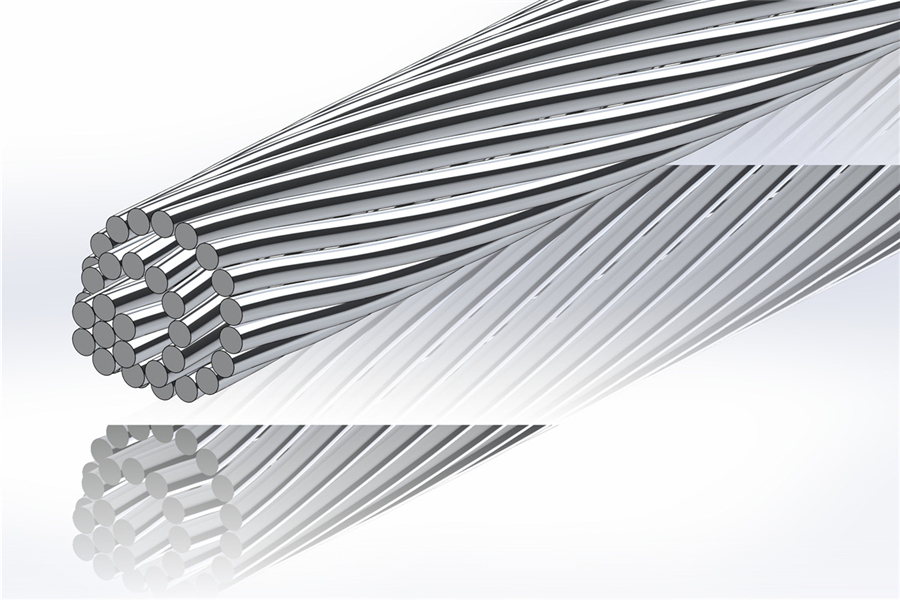
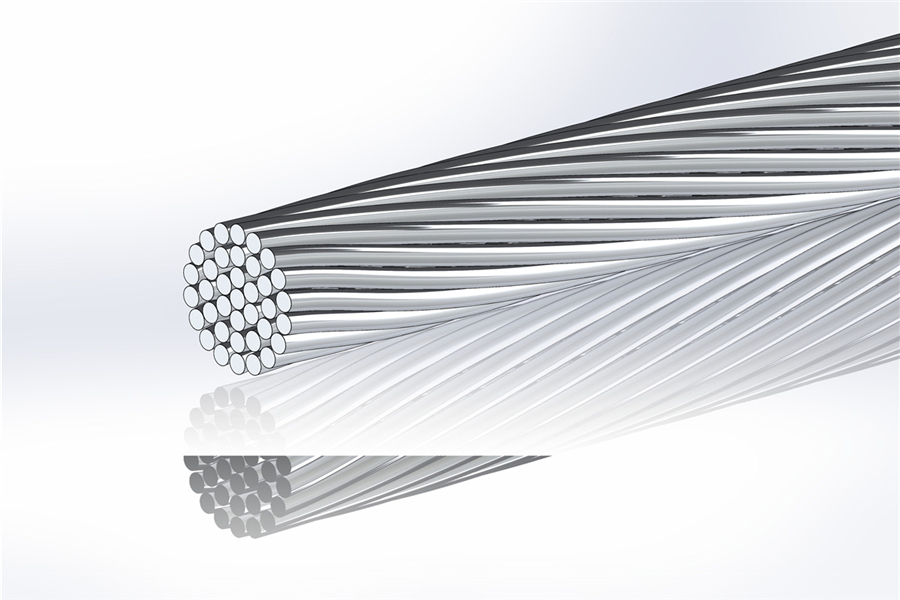
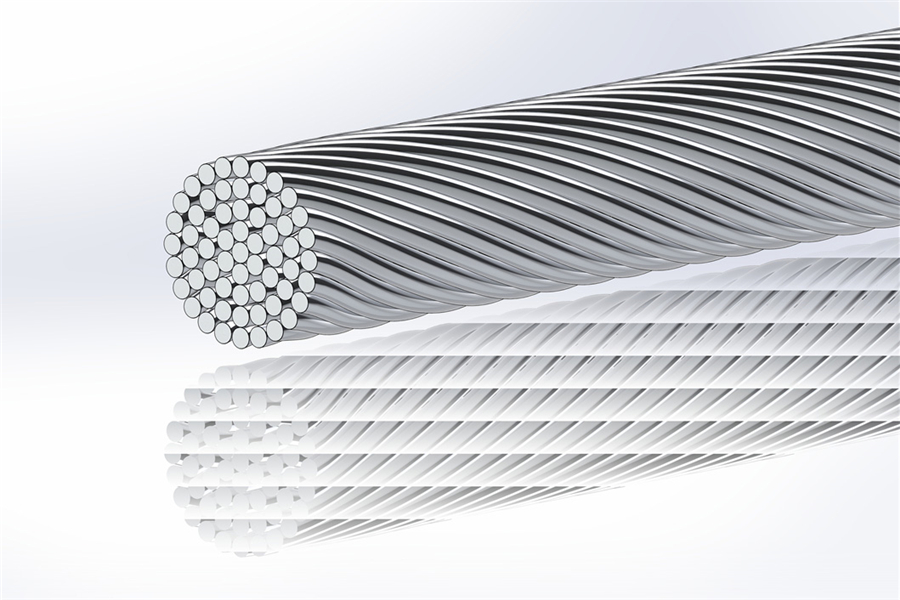
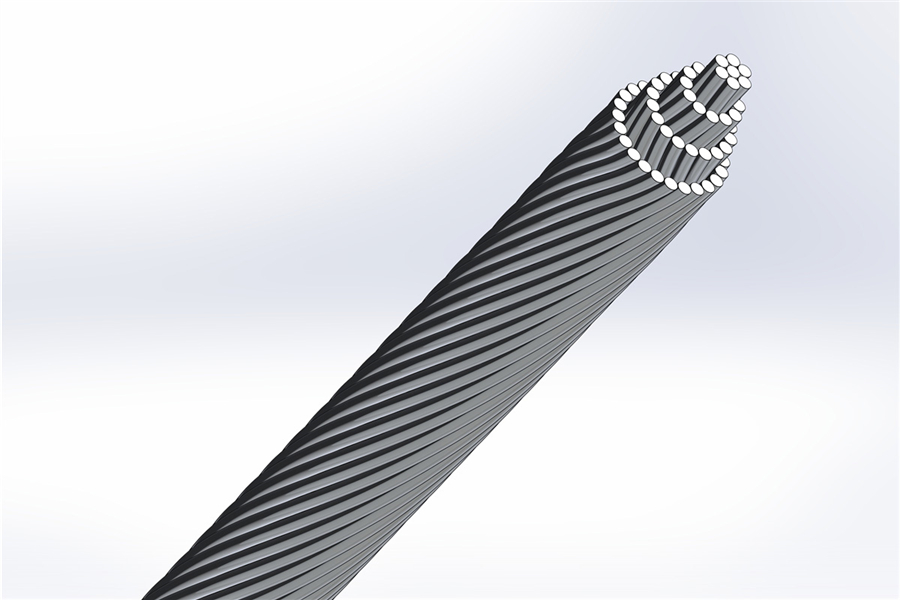
AAAC All Aluminum Alloy Conductor - China Suppliers and Factory for Lightweight, Cost-Effective Solutions
container
heading-type-1
div容器
| Aluminum Alloy Conductor (AAAC) | ||||||||||
| Code Name | Old Code Name | Sectional Area | Wire Diameter & Stranding | Overall Diameter | Nominal Breaking Load | Linear Mass | Maximum Resistance at 20℃ | Modulus of elasticity | Coefficient of linear expansion | |
| mm² | mm | No. | mm | kN | kg/km | Ω/km | N/MM² | 1/K | ||
| 22-AL4 | ASTER 22 | 22.0 | 2.0 | 7 | 6 | 7.15 | 60.2 | 1.4989 | 62000 | 2.3x10⁻⁵ |
| 34-AL4 | ASTER 34.4 | 34.4 | 2.5 | 7 | 7.5 | 11.17 | 94.1 | 0.9593 | 62000 | 2.3x10⁻⁵ |
| 55-AL4 | ASTER 54.6 | 54.6 | 3.15 | 7 | 9.45 | 17.73 | 149.4 | 0.6042 | 62000 | 2.3x10⁻⁵ |
| 76-AL4 | ASTER 75.5 | 75.5 | 2.25 | 19 | 11.25 | 24.55 | 207.9 | 0.4388 | 60000 | 2.3x10⁻⁵ |
| 93-AL4 | ASTER 93.3 | 93.3 | 2.5 | 19 | 12.5 | 30.31 | 256.6 | 0.3551 | 60000 | 2.3x10⁻⁵ |
| 117-AL4 | ASTER 117 | 117.0 | 2.8 | 19 | 14 | 38.02 | 321.9 | 0.2833 | 60000 | 2.3x10⁻⁵ |
| 148-AL4 | ASTER 148 | 148.1 | 3.15 | 19 | 15.75 | 48.12 | 407.4 | 0.2239 | 60000 | 2.3x10⁻⁵ |
| 182-AL4 | ASTER 181.6 | 181.6 | 2.5 | 37 | 17.5 | 59.03 | 500.9 | 0.1831 | 57000 | 2.3x10⁻⁵ |
| 228-AL4 | ASTER 228 | 227.8 | 2.8 | 37 | 19.6 | 74.04 | 628.4 | 0.1460 | 57000 | 2.3x10⁻⁵ |
| 288-AL4 | ASTER 288 | 288.3 | 3.15 | 37 | 22.05 | 93.71 | 795.3 | 0.1154 | 57000 | 2.3x10⁻⁵ |
| 366-AL4 | ASTER 366 | 366.2 | 3.55 | 37 | 24.85 | 115.36 | 1010.1 | 0.0908 | 57000 | 2.3x10⁻⁵ |
| 570-AL4 | ASTER 570 | 570.2 | 3.45 | 61 | 31.05 | 185.33 | 1575.0 | 0.0585 | 54000 | 2.3x10⁻⁵ |
| 851-AL4 | ASTER 851 | 850.7 | 3.45 | 91 | 37.95 | 276.47 | 2360.6 | 0.0394 | 52500 | 2.3x10⁻⁵ |
| 1144-AL4 | ASTER 1144 | 1143.5 | 4.0 | 91 | 44 | 360.22 | 3173.2 | 0.0293 | 52500 | 2.3x10⁻⁵ |
| 1600-AL4 | ASTER 1600 | 1595.9 | 4.0 | 127 | 52 | 502.72 | 4427.5 | 0.0210 | 50500 | 2.3x10⁻⁵ |
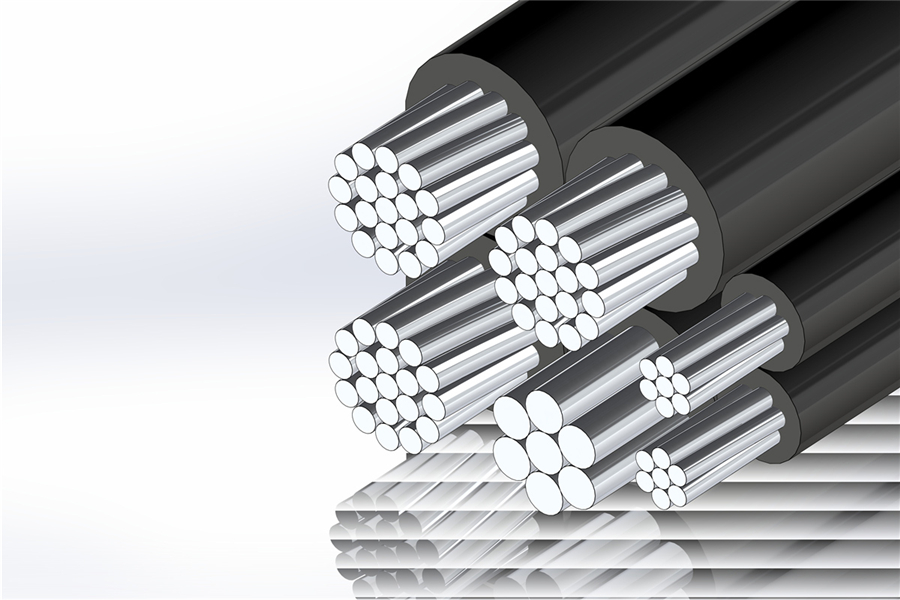
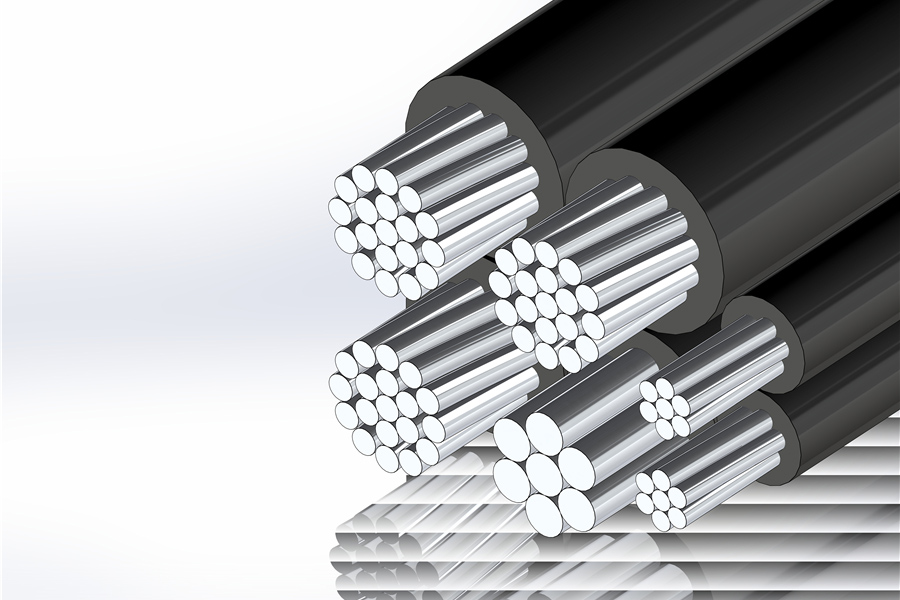
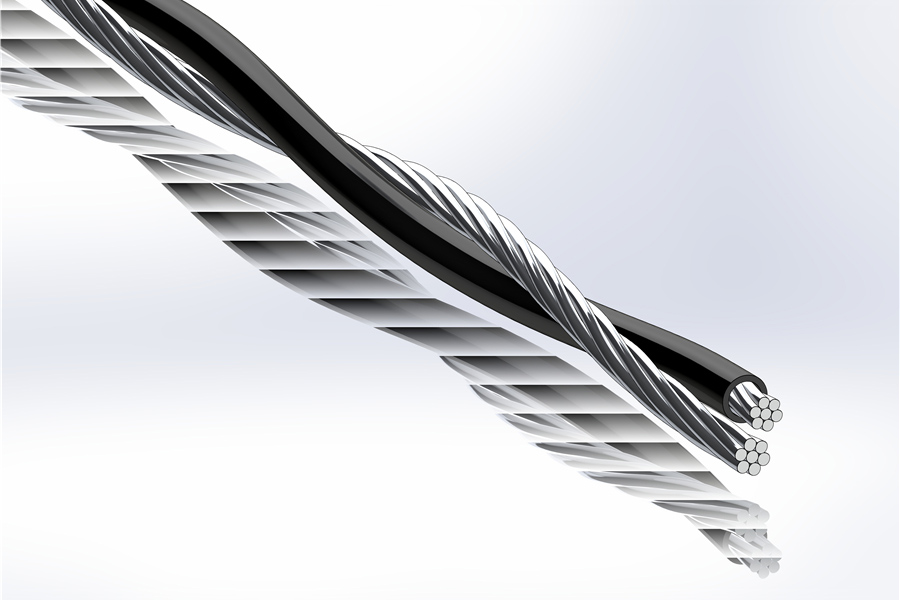
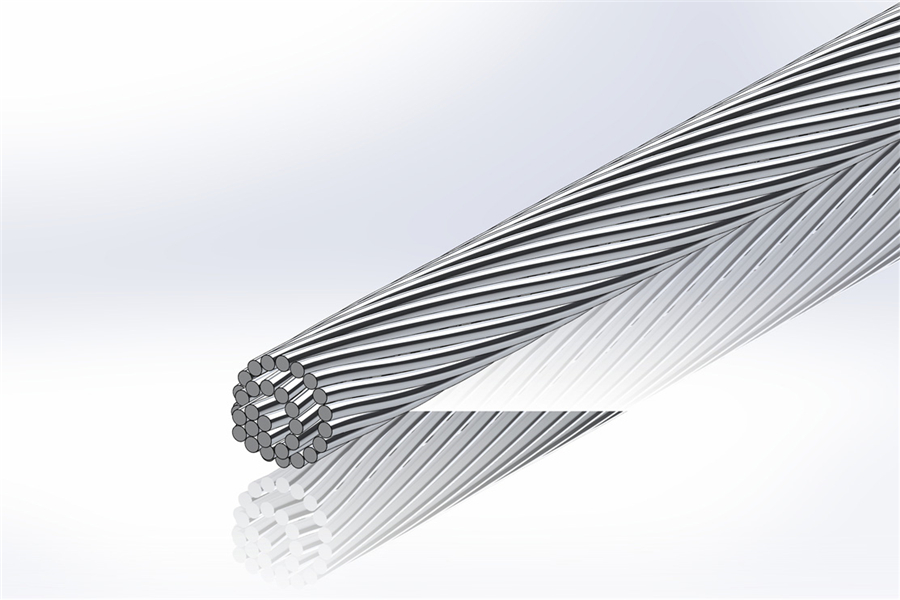
Note: The outermost layer is twisted to the Left (S).
Frequently Asked Questions (FAQ)
Q: What does AAAC stand for and what are its main applications?
AAAC stands for Aluminum Alloy Conductor. It is primarily used as bare overhead transmission and distribution cables, particularly in power lines where high mechanical strength, excellent corrosion resistance, and a superior strength-to-weight ratio are required.
Q: What is the significance of the "AL4" and "ASTER" designations?
"ASTER" is the standard European/French code name system for Aluminum Alloy Conductors (AAAC). The "AL4" suffix designates the specific high-strength aluminum-magnesium-silicon alloy grade used, which determines the electrical conductivity and mechanical properties of the conductor.
Q: Why is the outermost layer of the AAAC twisted to the Left (S)?
The S-direction (left-hand) lay of the outermost layer is a standard manufacturing specification. This uniform direction ensures proper compatibility with standard line installation tensioning tools, suspension clamps, and helical dead-end fittings without causing structural deformation.
Q: How does AAAC compare to ACSR (Aluminum Conductor Steel Reinforced)?
Unlike ACSR, AAAC consists entirely of aluminum alloy without a steel core. This design offers lighter weight, comparable tensile strength, improved corrosion resistance (highly beneficial in coastal/industrial environments), and lower electrical power losses due to the absence of magnetic losses from steel.
Q: How do the physical properties of AAAC change with larger cross-sectional areas?
As the sectional area increases (from 22-AL4 to 1600-AL4), the nominal breaking load and linear mass increase significantly, while the maximum electrical resistance at 20℃ drops. The modulus of elasticity also adjusts according to the stranding configuration (ranging from 50,500 to 62,000 N/mm²).